Showing posts with label TastesFromZion. Show all posts

Friday, April 21, 2017

Recipe variations that jazz up Classic Shakshouka


Shakshouka is a tomato stew dish that can be eaten at all hours of the day. (Photo: Joy/Flickr)


Turn it green, add a sprinkling of cheese, serve it over hummus – there's no denying the awesomeness of shakshouka.

Shakshouka is a relatively straightforward dish to make. It's basically the best tomato sauce you've ever had with a few eggs cracked over the top of it. Voila, that's it and it's darn delicious. But it's understandable if, from time to time, you want to add a little pizazz to this minimalist dish. Here are five ways to do just that.
Green shakshouka

Green shakshouka at Jack's Wife Freda, a Mediterranean restaurant with two lower Manhattan locations. (Photo: Courtesy of Jack's Wife Freda)

In case you didn't find shakshouka healthy enough, there's green shakshouka. In this rendition the tomato component is replaced with a sauteed green vegetable – spinach and swiss chard are popular alternatives, but kale is quickly gaining ground in the popularity ranks. Here's a recipe using swiss chard that's great for shakshouka novices.

The nice thing about this dish is that, while the recipe for traditional shakshouka isn't one to deviate too far from, green shakshouka is much more amenable to experimentation. Add mushrooms, tomatillo, lentils, leeks – anything you like, really.

Shakshouka hummus

Shakshouka hummus (foreground) is easy to make and a delicious alternative to eating the two dishes separately. (Photo: Christina Garofalo/Flickr)

This is an Israeli favorite, easy enough to make at home, and quite tasty. First you layer a dish with hummus, then you layer the shakshouka on top of it. That's it. Really.

If making it at home seems too daunting a task, then rest assured, if you happen to come across it on a restaurant's menu, it signals the chef's mastery of both foods, and you should probably order it. And eat it. Definitely eat it.


Louisiana shrimp shakshouka

Wunderkind Israeli chef Alon Shaya's ability to fuse the flavors of his adopted hometown of New Orleans and blend them with those of his home country have made him a culinary star Stateside. No dish is more symbolic of his approach to modern Israeli cuisine than Louisiana shrimp shakshouka. It is a staple of his eponymous restaurant Shaya, that takes a classic shakshouka recipe and adds okra, shrimp and spice to it. Surf and turf, meet surf and spicy.
Shakshouka with feta

Adding feta cheese to shakshouka is a good way to give the dish even more flavor. (Photo: Elena Veselova/Shutterstock)

This is a nice alternative on Israeli menus to plain shakshouka, especially at vegetarian restaurants, where the addition of meat is clearly not an option. It is one of the more popular dishes at the Silvana restaurant in New York City.

Cook up your shakshouka as usual. You can either add crumbled bits of feta before or after the eggs have been added – it really depends on whether you prefer to fully incorporate it into the dish or have it garnished on top. Either way you'll be happy to have included it.
Shakshouka pizza

Shakshouka pizza is a fun way to eat the traditional tomato stuff. (Photo: Joy/Flickr)

Placing a pan full of bright red stew in front of a child and getting them to eat it may be difficult. But dressing it up as pizza by throwing that red stew on top of some circular dough (or whatever shape pleases you), adding cheese of your choice and then plopping down a couple of eggs on top might give you a better chance of the outcome you want: a happy camper at the dinner table. Basically use the shakshouka as the sauce and then have fun with it. Remember that there are no rules to this one.

Wednesday, April 12, 2017

Sydney Baker's Spicy and Sweet Yam Latkes


Yams have pretty much stayed on the lowest rung of my list of favorite vegetables until I discovered the gateway to yam heaven – latkes! Latkes are shredded potato pancakes usually made around the time of the Jewish holiday Hanukkah, which is coming up and actually coincides with Thanksgiving this year. I guess unknowingly I came up with a ‘Thanksgivukkah’ recipe by making latkes out of yams, a popular Thanksgiving menu item usually paired with marshmallows. And this is how it all began…


I love the original latkes recipe, but I was forced to get creative when I picked up some yams at the local market mistakenly. In the store, they were labeled as sweet potatoes. I don’t know why I believed the sign because clearly they didn’t look like sweet potatoes. Upon cutting into the first one, I realized the flesh was white, which led me on a long journey on the Internet all about the difference between yams and sweet potatoes. Apparently, mislabeling and confusion about sweet potatoes and yams is rampant across the nation and people are up in arms about it….

Anyway, instead of lamenting about all of the yams I bought and didn’t know how to cook – mine were Japanese purple yams I found out – I figured I couldn’t go wrong with making them into latkes spiked with Kashmiri mirch, a mild and sweet Indian chili powder that resembles paprika. Kashmiri mirch is bright red and provides the coloring for a lot of popular Indian dishes like tandoori chicken.


Background: While living in London and working for the Sir Norman Hartwell , the Queens fashion designer , in his 20's ( 1960's) Sydney Baker shared a flat with two Indian friends and grew to love Indian cooking.
In this recipe, you can definitely use paprika if you don’t have Kashmiri mirch or the other similar mild Indian red chili powder, deggi mirch. Any of these chili powders will do the trick to make your yam latkes sweet and spicy. I also used chickpea flour, which is usually what is used to batter fried foods in Indian cooking, but you can use all-purpose flour if that’s what you have.

I served them with a dip I made of Greek yogurt, dill and lemon and a salad with my tomato achaar whisked into a tahini dressing. I hope you enjoy!

Yam is the common name for some plant species in the genus Dioscorea (family Dioscoreaceae) that form edible tubers.These are perennial herbaceous vines cultivated for the consumption of their starchy tubers in Africa, Asia, Latin America, the Caribbean and Oceania. There are many cultivars of yam. Although some varieties of sweet potato (Ipomoea batatas) are also called yam in parts of the United States and Canada, sweet potato is not part of the family Dioscoreaceae but belongs in the unrelated morning glory family Convolvulaceae.
Ingredients
1 large yam (3/4 pound) or if Yams are hard to find, potatoes are admirable substitutes
2 tablespoons oil
1 egg, beaten
1 tablespoon plain yogurt (Greek is what I used but I’m sure regular is fine)
1 tablespoon chickpea or all-purpose flour
1/2 teaspoon Kashmiri mirch, paprika or deggi mirch (more if you like hotter)
1/2 teaspoon cumin
1 tablespoon cilantro, chopped
salt & pepper to taste

Method
Peel your yam and grate it into a bowl. If there is moisture in your yams you can squeeze out with a cheese cloth. To the yams, add in your beaten egg, plain yogurt, Kashmiri mirch, cumin, salt and pepper. Next add in the chickpea flour – add more if you like your latkes more cakey and less if you like them a bit more hashy.

Place a plate lined with a paper towel on the side of the stove. Coat a non stick frying pan with oil under medium heat. When the oil is heated, put heaping teaspoons of the latke batter in the pan and flatten with your spatula. Make sure that your latkes comfortably fit in the pan because you will be flipping them. Cook until golden brown on bottom (1-2 minutes) and flip and cook until golden brown on the other side (1-2 minutes). Place the cooked latkes on the plate with the paper towel. Repeat for the remainder of your latke batter and add more oil as needed to the pan.

Sunday, April 9, 2017

Matzo Brei : Excerpted with permission from My Mother’s Kitchen: Breakfast, Lunch, Dinner, and the Meaning of Life, copyright © 2017 by Peter Gethers, published by Henry Holt and Company.


This is not a food that most people are even aware exists. And just to be clear, for any food snobs, don’t pronounce this “bree” as in brie cheese; it’s not nearly that sophisticated. It’s pronounced “bry” as in “bribe” or, more relevantly, “fry.” Think of it as a kind of Hebraic French toast. Now remove the toast and the maple syrup. My mom ate this as a child; it was a specialty at Ratner’s, but she also made it for me when I was a little boy, and I loved it. We used to eat it together on weekends. She liked it with apple sauce on the side. And sometimes a dollop of sour cream. She also sometimes ate it with a small helping of jam, which she often made herself, from scratch. I usually preferred my fried matzo salty rather than sweet.

Matzo brei is the first thing I tried making for my mother once I began my search for the meaning of food, family, and life. It did not require a lot of training or preparation. To be honest, a reasonably intelligent monkey could make a decent matzo brei. But during my cooking process, I proudly went where no simian had gone before.

Before cooking, I did learn a tiny bit about the dish. And that’s all there really is to learn about this particular repast. Matzo brei, in Hebrew and in Yiddish, literally means “fried matzo,” which gives you some indication of its subtlety and complexity. It is of Ashkenazi Jewish origin and although various sources say that it can either be formed into a cake, like a frittata, or broken up and cooked like scrambled eggs, my mother’s version in her Ratner’s cookbook disagrees. There, she has one recipe for “fried matzo,” which is stirred in the pan and thus scrambled, and one recipe for “matzo brei,” which is served pancake-style. I made brei.

Wikipedia points out that, in accordance with Jewish dietary laws, if matzo brei is prepared with any dairy product (e.g., butter), it should not be eaten with meat, nor should it be eaten with dairy if cooked in schmaltz (chicken fat). It is, of course, on the weird side that people follow dietary laws that were dictated by sanitary conditions from thousands of years ago. To make it even weirder, matzo brei is commonly eaten as a breakfast food during Passover, when, according to Jewish law, only unleavened bread is permitted. However, Wikipedia also points out that some Jews refuse to eat matzo brei during Passover because they do not eat gebrochts, matzo that has come into contact with water. In case you don’t think that religious instruction is insane, please read that last line again. It is against Jewish law to eat a piece of dry, unleavened bread if it touches water. If need be, read the line aloud. At some point, it’ll sink in.

The Matzo Brei recipe from The World Famous Ratner’s Meatless Cookbook

INGREDIENTS:

3 matzohs (NOTE FROM AUTHOR: NO PERSON OR BOOK EVER SPELLS MATZO THE SAME WAY; IT IS OFTEN SPELLED “MATZOH,” “MATZO,” OR “MATZAH.” I DON’T KNOW WHY THIS IS SO; PERHAPS NO ONE BOTHERED TO TRANSCIBE RECIPES WHILE WANDERING IN THE DESERT FOR FORTY YEARS; PERSONALLY, I WOULD HAVE PREFERRED A TABLET WITH THIS RECIPE CARVED INTO IT TO ONE WITH THE TEN COMMANDMENTS, BUT TO EACH HIS OWN.)

1/2 teaspoon salt

1/4 teaspoon pepper

2 eggs, well beaten

2 tablespoons butter

Jam, applesauce, or sour cream (optional)

DIRECTIONS:

1. Soak the matzohs in lukewarm water until soft (AUTHOR’S NOTE: UNLESS YOU’RE ONE OF THE AFOREMENTIONED ANTI-WATER/MATZOH COMBO LUNATICS). Drain thoroughly. The matzohs will be crumbly.

2. Season with salt and pepper. Stir in the eggs.

3. Heat the butter in an 8-inch skillet. Add the matzoh mixture and cook without stirring. Brown on one side, turn carefully with two pancake turners, and brown on the other side.

4. Serve hot with jam, applesauce, or sour cream.

Serves 2


I felt no need to master this simple dish before attempting to make it. I just decided to take the plunge, so I called my mom on a Saturday and told her I wanted to come over the next day to prepare her a surprise breakfast. The first and only real stumbling block in my plan was, on Sunday morning, finding a market that carried matzo. Apparently, a lot of stores only carry this product during Jewish holidays (and I guess only in places where they can shelve it so it doesn’t touch water; I can’t bear to think about the matzo that must have been discarded after Hurricane Katrina). But, happily, I live in New York City, so it was easier finding a box of matzo than it might have been if I were searching in, say, Huntsville, Alabama. It was a no go at the high-end Citarella store, and I struck out at my local Korean bodega, but the Gristedes supermarket a few blocks from my apartment had a whole shelf of the stuff, and two kinds, at that: plain and onion. Not one to mess with tradition, I went with the plain.

My mother was quite pleased when I outlined my plan. She hadn’t tasted matzo brei in years. I asked her if she’d help, or at least oversee my attempt to re-create such an iconic dish from both of our youths, so her home companion pushed her wheelchair into the doorway of the kitchen as I began.

I started by putting everything I needed on the kitchen counter and realized my mom was watching me like a hawk. Suddenly my nerves kicked in. No matter how simple the recipe, I really wanted this to work.

The first step was easy enough—I took a few matzos out of the box and put them in a bowl of water. Done and done.

When the matzos looked appropriately soggy to me, I was about to drain them but my mother commanded me to stop. Her voice contained a note of surprise as well as disapproval. I’d go so far as to say she was aghast. She said, “Give it to me.” I held the bowl out in front of me and she reached out, stuck her left hand in the bowl, picked up a chunk of the matzo, and rubbed it between her fingers.

My mother loves manicures—she gets one once a week. It is one of her rare vanities in her 90s, and she preens for several days each time she goes to the manicurist, holding up her nails for all to admire. This particular morning, I wasn’t paying attention to her perfect nails, though. I was noticing how old her fingers looked. How thin. Her skin seemed to be wrapped tightly around each digit, formfitting and deeply wrinkled. Nonetheless, they plunged strongly into the bowl and rubbed the mushy texture expertly. Those fingers suddenly became 60 years younger. My mother knew how drowning matzos were supposed to feel, and it only took her a second or two to nod her head in satisfaction. The nod said: Now you can proceed.

No monkey I ever heard of absorbed this kind of knowledge in a kitchen: Sometimes your food needs to feel right before you can go ahead and cook it. Texture counts. Don’t be afraid to plunge your hands right in.

Now I drained the bowl, getting out the excess water, and added some salt and pepper; less salt than I normally would use because my mom’s on a low-salt diet. I love sweets—almost anything that tastes sugary—but I love salt even more. If forced to choose, I’d go with a heavily salted fried egg over even the most delectable chocolate brownie. If it were up to me, I would have sprinkled that salt for another 10 seconds or so, but out of consideration, I just flicked in a drop of sea salt and mixed it around. Possibly the first selfless food act of my life.

Next: time for the eggs. I cracked the first of four eggs into the blue plastic bowl containing the soggy matzos. Immediately, a bit of shell fell in the bowl and I stabbed at it with my finger to try to remove it. Before I even managed to touch anything, I heard the words: “You don’t crack them over the same bowl.”

In all the years I’d been cooking, this is something that had never occurred to me. My modus operandi was always to crack my eggs on the inside rim of the bowl I was working with, then, annoyed, pick out any pieces of shell that had fallen into whatever mixture was already there.

I went, “Really?” and my mother said, “Of course not.” She said it rather sternly, too. I told her that I’d always done it this way and she gave me a look that said she was seriously considering the possibility that her younger son was a borderline idiot.

I got a second bowl out, cracked the remaining three eggs into it, picked out the one or two pieces of shell that did indeed drop in, and, when all was clean, dumped the shell-less eggs into the larger bowl with the matzo. My mother looked at me proudly, as if I’d just performed my first successful brain surgery.

I heated the skillet, then added the butter. Even though I’d normally use olive oil, I decided to go with the recipe as printed. Why screw around?

When the pan—on medium heat—was sizzling with the melted butter, I poured the matzo mix in and spread it evenly so it was pancake-like. I turned the heat up just a bit and waited.

One of my many flaws, in the kitchen and out, is that I’m impatient. At the stove, I always turn things over too quickly, trying to will my food to cook faster. I also want the people I work with to talk faster and the guys I play poker with to deal faster. I’m impatient to get to the point as well as to things I want to enjoy. But I forced myself to wait until I was fairly certain the matzos were properly brown on one side. It wasn’t easy but I held firm. I poked at the stuff with a spatula, trying to get a sense of where things stood, and when the timing seemed right, I flipped the pancake, exactly as instructed.

Perfection.

The cooked side was a lovely, evenly spread brown. I’d say it looked professional, if there was such a thing as professional-looking matzo brei, which I doubt. I took the pan off the heat for a moment to show my mom. She looked impressed. Avoiding too much hubris, I made sure it went quickly back on the fire.

A couple of minutes later, the B-side was also done, and we were ready to eat.

I asked my mom if she preferred applesauce, sour cream, or jam. She chose jam, saying that this was always her favorite combination. She had a fancy raspberry jam in her fridge, as well as an equally fancy cherry, so I put both out. We both used the cherry and it was the right call.

As we ate this perfect combination of savory and sweet, I could tell that my mother was delighted. Since her stroke, she has had to learn to eat mostly with her left hand—she is naturally right-handed—so she eats slowly and deliberately, as it’s difficult to maneuver a knife and fork. She will rarely ask for help, though, even when cutting a tough steak, and she does way better than I ever could as a lefty. This breakfast required no cutting, however, so she ate heartily and, for her, quickly. Her delight ultimately overcame her decorum and she pretty much wound up skipping the fork completely to just go with the thumb and forefinger of her left hand.

“As good as I remember,” she said when we’d both finished. “It felt authentic.”

Watching her lick the last remaining bit of cherry preserve off a knuckle on her left hand, I must admit I felt authentic, too.

Excerpted with permission from My Mother’s Kitchen: Breakfast, Lunch, Dinner, and the Meaning of Life, copyright © 2017 by Peter Gethers, published by Henry Holt and Company.

Salva Vida Address: Ha-Yarkon St 88, Tel Aviv-Yafo Phone: 03-778-8996 Hours: Open today · 7AM–12:30PM, 6–11PM


The Salva Vida restaurant at Tel Aviv’s Brown TLV Hotel, the latest work of Israeli chef, Yuval Fachler might take the crown of being Tel Aviv’s most innovative restaurant for the summer of 2016. Salva Vida’s cuisine fuses Californian techniques with Mediterranean traditions, while proposing Southern Italian concepts with an Israeli twist. Tel Aviv, the ‘Silicon Wadi’, is second only to California’s Silicon Valley in the number of start-ups that it is home to, so the connection which is so strong in economic terms fits neatly into the culinary scene. In fact, Fachler, studied at the Culinary Institute of America after working under the arms of Gordon Ramsey in London, and in Michelin-starred restaurants in Italy.

Among the dishes on offer at Salva Vida, are Smoked Trout, Artichoke, Parmesan, Quail egg; Drum Fish, Bouillabaisse, Potato and Kale; and Salmon Sashimi with Grapefruit, Avocado and Pistachio. The setting of the restaurant, in the garden of the Brown TLV Hotel, the city’s only member of ‘Design Hotels’, and for many years the beating pulse of the vibrant boutique hotel scene in the city, is a good fit with its status as an innovative, fashionable, and high quality addition to the Tel Aviv restaurant scene, albeit a temporary one, that will not stick around for long. So add it to your summer 2016 Tel Aviv bucket list before it’s too late.


Chef Yuval Fachler plating sashimi


Octopus. Artichokes. Smokey vinaigrette


Tuna. Mozzarella. Strawberries

(Photo credits to Anatoly Michalo)

Thursday, April 6, 2017

Sydney Baker's Spicy and Sweet Yam Latkes


Yams have pretty much stayed on the lowest rung of my list of favorite vegetables until I discovered the gateway to yam heaven – latkes! Latkes are shredded potato pancakes usually made around the time of the Jewish holiday Hanukkah, which is coming up and actually coincides with Thanksgiving this year. I guess unknowingly I came up with a ‘Thanksgivukkah’ recipe by making latkes out of yams, a popular Thanksgiving menu item usually paired with marshmallows. And this is how it all began…


I love the original latkes recipe, but I was forced to get creative when I picked up some yams at the local market mistakenly. In the store, they were labeled as sweet potatoes. I don’t know why I believed the sign because clearly they didn’t look like sweet potatoes. Upon cutting into the first one, I realized the flesh was white, which led me on a long journey on the Internet all about the difference between yams and sweet potatoes. Apparently, mislabeling and confusion about sweet potatoes and yams is rampant across the nation and people are up in arms about it….

Anyway, instead of lamenting about all of the yams I bought and didn’t know how to cook – mine were Japanese purple yams I found out – I figured I couldn’t go wrong with making them into latkes spiked with Kashmiri mirch, a mild and sweet Indian chili powder that resembles paprika. Kashmiri mirch is bright red and provides the coloring for a lot of popular Indian dishes like tandoori chicken.


Background: While living in London and working for the Sir Norman Hartwell , the Queens fashion designer , in his 20's ( 1960's) Sydney Baker shared a flat with two Indian friends and grew to love Indian cooking.
In this recipe, you can definitely use paprika if you don’t have Kashmiri mirch or the other similar mild Indian red chili powder, deggi mirch. Any of these chili powders will do the trick to make your yam latkes sweet and spicy. I also used chickpea flour, which is usually what is used to batter fried foods in Indian cooking, but you can use all-purpose flour if that’s what you have.

I served them with a dip I made of Greek yogurt, dill and lemon and a salad with my tomato achaar whisked into a tahini dressing. I hope you enjoy!

Yam is the common name for some plant species in the genus Dioscorea (family Dioscoreaceae) that form edible tubers.These are perennial herbaceous vines cultivated for the consumption of their starchy tubers in Africa, Asia, Latin America, the Caribbean and Oceania. There are many cultivars of yam. Although some varieties of sweet potato (Ipomoea batatas) are also called yam in parts of the United States and Canada, sweet potato is not part of the family Dioscoreaceae but belongs in the unrelated morning glory family Convolvulaceae.
Ingredients
1 large yam (3/4 pound) or if Yams are hard to find, potatoes are admirable substitutes
2 tablespoons oil
1 egg, beaten
1 tablespoon plain yogurt (Greek is what I used but I’m sure regular is fine)
1 tablespoon chickpea or all-purpose flour
1/2 teaspoon Kashmiri mirch, paprika or deggi mirch (more if you like hotter)
1/2 teaspoon cumin
1 tablespoon cilantro, chopped
salt & pepper to taste

Method
Peel your yam and grate it into a bowl. If there is moisture in your yams you can squeeze out with a cheese cloth. To the yams, add in your beaten egg, plain yogurt, Kashmiri mirch, cumin, salt and pepper. Next add in the chickpea flour – add more if you like your latkes more cakey and less if you like them a bit more hashy.

Place a plate lined with a paper towel on the side of the stove. Coat a non stick frying pan with oil under medium heat. When the oil is heated, put heaping teaspoons of the latke batter in the pan and flatten with your spatula. Make sure that your latkes comfortably fit in the pan because you will be flipping them. Cook until golden brown on bottom (1-2 minutes) and flip and cook until golden brown on the other side (1-2 minutes). Place the cooked latkes on the plate with the paper towel. Repeat for the remainder of your latke batter and add more oil as needed to the pan.

Saturday, April 1, 2017

Tangier,Bar Yehuda ha-Levi St 93, Tel Aviv-Yafo Phone:03-631-4836


Unlimited beverages at attractive prices.

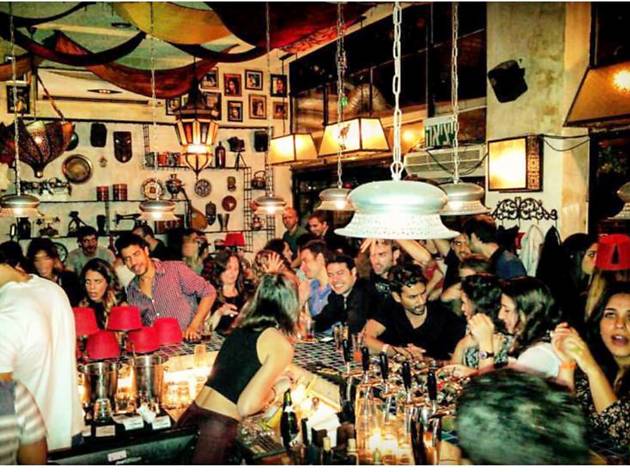
Tangier is a Moroccan bar with five different fixed-price all you can drink bracelet options. From 17:00 to 20:00 is happy hour, 1+1 for all food and drink. Sunday’s is ladies night, where girls drink unlimited for NIS 39. Tangier serves a variety of Moroccan-style snacks and dishes, tasty additions for your night out. Come enjoy the colorful and unique design, as well as the authentic music, which contribute to the Middle Eastern vibe. Tangier is located in the center of the commercial part of Tel Aviv and is popular with locals, so come early or make a reservation.


CAFE 65 ON ROTHSCHILD BOULEVARD STARTS THE MORNING OFF JUST RIGHT

Adress: Cafe 65 ,Rothschild Blvd 65, Tel Aviv-Yafo
Phone: 03-767-7675
Hours: Open today · 6:30AM–5PM
Cafe 65 pays attention to the little things that some other restaurants take for granted.


Breakfast foods at Cafe 65. (photo credit:AFIK GABAY PHOTOGRAPHY)

Cafe 65 has mastered the morning meal. Nearly every café has an Israeli breakfast on its menu, but only a handful make sure that the ingredients are top quality. Cafe 65 is one of these places.

The cafe is part of the relatively new 65 Hotel, named for its address, smack dab in the middle of the upscale Rothschild. Owners of the Atlas Hotels Group spent four years and hired celebrity architect Haim Dotan to renovate the building and add four floors to bring it up to its current eight stories and 74 rooms. Another of Cafe 65’s advantages is its outdoor seating. There is seating inside, but the cafe’s large patio overlooking the boulevard is by far the favored spots.

After sitting down at a cozy table for two on a lazy Friday morning, my dining companion and I were eager to try the new Cafe 65 brunch special (NIS 95 per person). This includes a hot beverage, a breakfast buffet as well as a separate menu including a choice between five unique breakfast dishes. That day, the dishes ranged from eggs Benedict to green shakshuka and French toast. Cafe 65 does not have a kashrut certificate, even though all the ingredients are kosher and the kitchen is only dairy, as it operates on Shabbat in the same manner as the rest of the week.

After ordering some hot drinks, we went to explore the breakfast buffet set up in a separate space at the back of the restaurant. A variety of cheeses were offered alongside salads of fresh vegetables and antipasti, marinated fish and ikra, several different kinds of halva, decadent pastries as well as a sabich corner, whereby they supply all the individual ingredients to make your own pita. One is really spoiled for choice.

After enjoying an Americano and orange juice, we were served the green shakshuka with chard, spinach and goat yogurt. The shakshuka was seasoned perfectly, and the eggs were cooked just right.

We were then presented with the eggs Benedict. I’m not an eggs Benedict connoisseur by any means but I’ve tried my fair share, and this dish was one of the best I’ve had. Atop two pieces of toasted brioche, the poached eggs were cooked to perfection, and the strips of smoked salmon on top provided the savory flavor I was craving. The Hollandaise sauce was lemony and buttery and just a little bit tart and not too rich. So many places make it from a tasteless mix, and you can tell.

Eggs Benedict at Cafe 65. Credit: Afik Gabay Photography

Last but not least we tried the French toast which consisted of brioche, berry jam, pear in wine and whipped cream. What made them so good was that they were light and fluffy but still had flavor and substance without tasting like cake. No syrup necessary, as the berries and cream delivered the perfect amount of sweetness.

Without a doubt, this was one of the more memorable brunches we’ve had in Tel Aviv in quite a while! Simply put, they pay attention to the little things that some other restaurants take for granted.

Abraham Hostel Bar, Levontin St 21, Tel Aviv-Yafo Phone: 03-624-9200


Whether staying the night or dropping in for a drink, Abraham Hostel invites you to enjoy its bar’s cool vibes and luscious libations.

After its sister’s hostel bar became one of the most popular in Jerusalem, the proprietors of the boutique Tel Aviv Abraham Hostel decided to open a bar in the city that never sleeps. Located in the hostel itself, the bar is currently open to the general public every Thursday evening, where they host an Italian event with a buffet of antipasti, including cauliflower, sweet potato and pesto, pickled fish, cheeses, tiny sandwiches, shrimp, petit fours and spritz to wash everything down. Events take place in the hotel's bar, which has a pool table and a wide selection of beers.


Friday, March 17, 2017

Beef pot roast and potato hash


Image result for roast beef hash recipe
Serves 4 generously
10 to 12 ounces leftover beef pot roast (or roast beef) cut into 1/2-inch cubes (see Kitchen Notes)
 2-1/2 pounds of Yukon Gold potatoes (see Kitchen Notes)
6 tablespoons chopped shallots
2 stalks celery, finely sliced crosswise
2 or 3 tablespoons ketchup
2 or 3 tablespoons sriracha (see Kitchen Notes)
1 tablespoon fresh rosemary, chopped (see Kitchen Notes)
2 teaspoons salt
freshly ground black pepper
olive oil
butter (optional)
Special Equipment: Two 12-inch skillets ovenproof to 400 degrees F. This volume of ingredients makes two skillets worth of hash.
Peel the potatoes and cut into chunks about 1/2-inch to 3/4-inch in size. Put into a pot, cover with cool water, bring to a boil and simmer until tender. Immediately drain, rinsing with cold water. Put in a big bowl. Mash the potatoes briefly and gently – you want most of the cubes to be broken down, but still retain a bit of “cubiness.” Add the cooked beef to the bowl.
Preheat oven to 400 degrees F. In an oven-safe skillet, heat up 2 teaspoons olive oil over a medium flame. Add the shallots and celery and sauté for two minutes, until the shallots are clear and limp. Add this to the potato and beef mixture. Also add a good grating of black pepper, the salt, the fresh rosemary, ketchup, and sriracha. Mix everything together until it is pretty uniform.
To each of the two skillets, add 1 or 2 tablespoons olive oil and a teaspoon of butter (which is optional, but adds a nice buttery touch) and heat to medium low. In each skillet, put half the hash mixture and spread out so it is even and uniform. Press down all around with a sturdy spatula to encourage it to form a cake. Turn up the heat a bit to medium. Sauté until the bottom begins to turn golden, about 3 or 4 minutes. Transfer the pans to the oven and bake until the top begins to brown, about 10 minutes depending on your oven (see Kitchen Notes).
You may also prepare this as an individual serving. Cut the recipe in 1/4 and prepare in a small (10-inch) ovenproof skillet. This is a hearty eater serving – very generous. When the pan emerges from the oven, flip the hash onto the serving plate so that the well-browned bottom shows. Or you may cut the recipe in half to serve two or three people, cooking it in one skillet. If you fix this in big skillets, then serve wedges of the hash straight from the pan.
Kitchen notes
Choice (of) meats. I used leftover beef pot roast. You can use pretty much any simply prepared leftover meat or fowl – roast chicken, roast turkey or, of course, corned beef.
You say potato… I used Yukon Gold because that is what we had in the fridge. Russets would also work well.
Ketchup and sriracha. If you prefer no spiciness, then omit the sriracha and replace with the same amount ketchup. Alternatively, instead of sriracha, substitute oyster sauce. Also, once you have mixed everything together, if the mix seems dry or like it needs more punch, then add another tablespoon of either sauce.
Rosemary, fresh or dried. Yes, if you do not have fresh, you may use dry, but sauté it along with the scallion and celery. Also, use about half as much. Alternatively, substitute tarragon.
Oven time. Our rental apartment oven is so fickle that I never can be sure what kind of timing I may expect – the same gingerbread recipe, for instance, may take 28 minutes or 35 minutes. Thus my eternal reminders about oven dependability. Use an oven thermometer, if you have one, to check the temperature. Otherwise, just know your oven and/or start checking your food’s progress early and often.

Corned beef and cabbage


1 corned beef brisket

Carrots, peeled and chopped (or substitute baby carrots)

Red potatoes, chopped

1 head of cabbage, cut into wedges

Place the corned beef brisket in a large pot. Sprinkle with the packet of seasoning included with the brisket. Fill the pot with enough water to cover the brisket. Bring to a boil. Reduce heat, cover, and simmer for 3-4 hours, until fork tender. Add the cut potatoes and carrots to the pot during the last 20 minutes of cooking time and the cabbage during the last 15 minutes. Remove the corned beef from the water and cool for 10-15 minutes before cutting against the grain. Remove the cabbage, potatoes, and carrots to serve on the side.

Corned Beef Tip #1 - Remove excess exterior fat before slicing and serving for a more appetizing presentation.

Corned Beef Tip #2 – Your tender corned beef is likely to fall apart while you slice it. This works fine when served as a corned beef dinner, but if you’d prefer to thinly slice the brisket for sandwiches, allow the corned beef to cool in the refrigerator before slicing and reheating. Cooled corned beef slices easier than hot corned beef.


Irish lamb stew


Serves 4
2 tablespoons canola oil (plus more, if needed)
1 tablespoon butter
1-1/4 pounds lamb, cut into bite-sized chunks (see Kitchen Notes)
Salt, freshly ground black pepper
1-1/2 teaspoons dried thyme, divided
1 medium yellow onion, chopped
2 cloves garlic, minced
2 tablespoons flour
1 bay leaf
12 ounces dark beer, such as a stout [can be omitted]
12 ounces chicken broth or stock
1 cup water (plus more, if needed)
1 turnip, peeled and cut into chunks
3 carrots, peeled and sliced on diagonal into bite-sized chunks
5 red potatoes, scrubbed and cut into bite-sized chunks, but not peeled (1-1/2 to 2 pounds)
For roux (optional):
1 tablespoon butter
1 tablespoon flour
Season lamb with salt, pepper and 1/2 teaspoon of dried thyme. In a dutch oven, heat canola oil and butter over medium-high flame, swirling to combine. Brown lamb in batches, 3 or 4 minutes per batch, transferring to a bowl as it is done. Reduce heat to medium and sauté onion until translucent, about 3 or 4 minutes, adding more oil if necessary. Add garlic and sauté until fragrant, about 45 seconds. Add flour and remaining thyme, stirring constantly until flour is slightly browned, about 2 minutes. Add beer and stir, scraping up any browned bits in pot. Stir in broth, water, turnip and carrots. Return meat to pot and bring to a boil. Reduce heat to very low, cover pot and simmer stew for 1/2 hour.
Add potatoes to pot and cook covered until potatoes are almost tender, about 1/2 hour, adding water by 1/4 cups, if necessary (it probably won't be). Uncover pot and continue cooking until lamb is tender, another 15 minutes or so. Meanwhile, check the sauce. It will probably be fairly soupy; some people prefer it this way. If you’d like your sauce a little thicker, make a quick roux. Heat a small skillet over a medium-low flame. Melt 1 tablespoon of butter and sprinkle in 1 tablespoon of flour, stirring with a whisk. Cook for 3 or 4 minutes, stirring constantly, until the mixture begins to brown. Add a scant 1/4 cup of water, stirring to blend. Stir resulting roux into stew pot and let it cook a few minutes longer. Adjust seasonings and serve immediately.
Kitchen Notes
Selecting lamb for stew. You can sometimes find lamb stew meat, pre-cut. If not, look for boneless lamb shoulder or bone-in lamb shoulder chops. If you opt for the chops, cut into chunks before cooking and trim away some of the excess fat (but don't go crazy here – a little fat adds flavor). Reserve the bones and brown with the meat, adding them back to the pot along with the browned lamb for added flavor. Remove bones before serving.