Showing posts with label Tastes from Zion. Show all posts

Friday, October 5, 2018

Fried Schnitzel with Apricot Sauce, A recipe from Stephen Darori, #BArdOfBatYam, #PoetLaureateOfZion


Do you dream about making schnitzel without all the labor-intensive work? If so, this recipe is for you. There is minimal oil and no frying. Dump the pieces on a pan and bake them. It’s that simple. No need to stand sentry over the boiling oil for fear of splatters and burns. Of course, it’s also healthier.


Slice the chicken into thin strips. It’s easier to slice thinly when half-frozen. So if you’re defrosting the chicken, don’t let it defrost fully.


Crack the egg into a bowl, and mix the cornflake crumbs and flour in a separate bowl. Dip each piece of chicken into the egg and then into the crumbs. Lay the chicken pieces on a greased cookie sheet. Don’t worry about overcrowding the pan—it’s fine if the pieces are touching.


Drizzle the oil over the chicken and bake at 400° F for about 20 minutes. Baking time will depend on the thickness of your chicken, so cut one piece open to see if it’s ready before you take them all out. Also keep in mind that baking on disposable pans usually requires a bit more oven time than real pans.

Eat immediately or refrigerate for later. This chicken also works well when you cut it up and add it to salad.


Want to fancy it up a little? Make the dipping sauce and serve it alongside the chicken. Watch it disappear in no time!


Shnitzel Ingredients
1 lb. chicken breast
2 cups flavored corn flake crumbs
¼ cup flour
1 egg
3 tbsp. oil

Schnitzel Directions
Cut the chicken into thin strips. It’s easier to slice thinly when the chicken is half-frozen.
Crack the egg into a bowl and beat it with a fork.
In a separate bowl, mix the flour and cornflake crumbs.
Dip each piece of chicken into the eggs and then into crumbs. Lay the chicken pieces on a greased cookie sheet and drizzle with the oil.
Bake at 400° F for approximately 20 minutes (longer if your chicken is thicker or if you’re using a disposable foil pan).

Sauce Ingredients
½ cup apricot preserves
1 tbsp. soy sauce
2 tbsp. white sugar
1 tbsp. brown sugar
2 tbsp. vinegar
⅛ tsp. ginger powder
⅛ tsp. garlic powder
¼ cup water

Sauce Directions
Cook all sauce ingredients in a small saucepan. Bring to a boil and then reduce to a simmer.
Simmer over a very low flame for 10–15 minutes until the sauce thickens. Make sure to stir frequently so the sauce doesn’t burn.
When it’s ready, take the sauce off the fire and pour it through a fine mesh strainer.
Serve alongside the schnitzel for dipping.

Thursday, April 26, 2018

Kachka: A Return to Russian Cooking Kindle Edition by Bonnie Frumkin Morales and , Deena Prichep (Flatiron Books) (IBRCookBooks)

Kachka: A Return to Russian Cooking by [Morales, Bonnie Frumkin, Prichep, Deena]
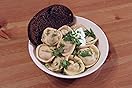
Since I have bought this cookbook I have made many recipes from it. The book is written with considerate clarity and the recipes though simple always yield deliciously comforting results. My favorites from Kachka are the pelmeni recipes. If you are like me, the idea of making your own dough for dumplings sounds awfully overwhelming. However, Morales promises so convincingly that a homemade dough is far better than anything you can find at the store and her instructions on how to roll out your own dough are straightforward and foolproof.

The ingredients lists are often short and simple. At times the recipes may recommend a trip to a Russian grocery store to find items, although clear instruction is usually given on how to select more obscure products or find substitutions.

There are many more recipes I can't wait to try. I've sampled a little of every chapter and can say that from appetizers to the sweets, everything was easy to understand and could be whipped up without too much stress even in my small apartment kitchen. The recipes feel like the kind that I will turn to again and again for any occasion whether you are entertaining, or looking to stockpile your freezer with homemade goods which can be made in an instant later. I highly recommend Kachka to cooks of all skill levels wanting to explore Russian cooking!

I was not paid for this review and have no affiliation with the author. I love cookbooks and review and write about them. Check out my instagram @theReadingCook for more photos and information about my experiences with Kachka.

Comment

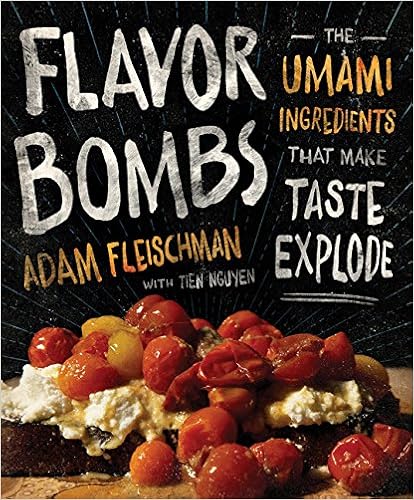
Flavor Bombs: The Umami Ingredients That Make Taste Explode Hardcover – May 15, 2018 by Adam Fleischman (Author), Tien Nguyen (Author), Wendy Sue Lamm (Photographer) (Rux Martin/Houghton Mifflin Harcourt ) (IBRCookBooks), a review by the Bard of Bat Yam ( #BardOf BatYa) , Poet Laureate of Zion (#PoetLaureateOfZion) and Stephen Darori ( #stephendarori, @stephendarori)


The founder of the national empires Umami Burger and 800 Degrees Pizza shows how to detonate flavor in beloved dishes using ordinary ingredients high in umami

Why does everyone love burgers and pizza? When Adam Fleischman investigated, he discovered what they—and many other ultra-flavorful dishes have in common: umami. A renegade self-taught cook, Fleischman deployed this savory “fifth dimension of taste” to ratchet up flavor using ingredients naturally rich in umami, such as Parmesan, tomatoes, caramelized onions, and anchovy paste. In so doing, he created ultimate versions of icons, including Umami Burger with Port and Stilton, Sweet and Savory Brisket, and Parmesan Fondue. All the recipes are made from the same “umami pantry” ably explicated in the front of the book.

What are Flavor Bombs?

Looking for a great way to save time, money, and food? The answer is Flavor Bombs. They’ll make your meals easier, and much more delicious. But what are they and how do you make them? Cooking with Flavor Bombs gives you the lowdown.


What are Flavor Bombs?

Flavor Bombs are combinations of savory, sautéed aromatics, fresh herbs, or sauce reductions blended together and frozen in ice cube trays, small containers, small bowls, or even just spooned onto a tray lined with wax paper. They are also a great way to reuse plastic containers, such as small sauce containers with lids and egg cartons. Once they’re frozen, you transfer them to an airtight container or resealable freezer bag and they’re ready to add a flavor explosion to your meals.

The ingredients are chopped by hand, in a food processor, or even pounded with a mortar and pestle, depending on how rustic or refined you want your Flavor Bomb blends to be. Fresh ingredients may be preferable but using pre-prepped, chopped vegetables in containers or even frozen vegetables will produce very similar results. The herbs, however, should always be fresh.

Making Flavor Bombs is an excellent way to take advantage of specials in your market’s produce department. Stock up, chop up, and free up time and money! Go that extra mile when you buy that pricey batch of herbs or exotic vegetable, make enough for leftovers, and then make a Bomb out of it.


Components of a Successful Flavor Bomb

A successful flavor bomb includes the five basic tastes: sweetness, sourness, bitterness, saltiness, and umami. Along with the other ingredients in your dish, you may detect these flavors now more than ever since you are creating the background or building block of the dish with Flavor Bombs. By the way, spicy is not a taste, it hits the pain receptors, not the taste buds—so go as spicy as you dare!

Sweetness: Found in “sweet” vegetables, such as onions and carrots, sugars are drawn out when these vegetables are caramelized.

Sourness: Found in vinegar and lemon, sourness brings a brightness to the tongue, which contrasts nicely with rich, savory flavors and can help cut through fattiness.

Bitterness: Different than sourness, bitterness can be considered unpleasant but yet rounds out richness and adds another dimension of taste to dishes. It is found in citrus peel, herbs, and leafy greens.

Saltiness: Identified with foods containing sodium, such as soy sauce, miso paste, and even celery, salt harmonizes and brings out the flavors of foods when used in moderation. It shares some characteristics with umami.

Umami: This Japanese word means “yummy” or “delicious” (and it is). Umami has a meaty, savory taste that is found in miso paste, soy sauce, tomato paste, and dried mushrooms.

From the Publisher


Fettunta from Flavor Bombs

Fettunta is grilled garlicked and oiled bread, the Italian version of the French tartine.

The type of bread you’ll want for your fettunta depends on the toppings. The toppings I have here, a bagna cauda and a raclette, are hearty, so I like to use bread that’s equally sturdy, like a rustic boule. Of course you can use sourdough in a pinch.

In addition to preparing these to order, you can make the fettunta for a party. Instead of assembling each slice of bread individually, prepare a big batch of each topping and set them out on the table, along with the grilled bread. Your guests can pick and choose and build their own fettunta.
Bagna Cauda Fettunta | Serves 4

Bagna cauda is usually translated as 'hot bath,' and it’s a classic dish from the Piedmont region of Italy where anchovies and garlic are bathed in warm olive oil until the flavors meld into a beautiful dip. My version turns it into a topping; with the anchovies and blistered cherry tomatoes, this is a very umami-intense fettunta.


Ingredients :

7 garlic cloves, peeled
¼ cup extra-virgin olive oil, plus more for brushing the bread
8 tablespoons (1 stick) unsalted butter
¼ cup anchovy fillets, rinsed
Freshly ground black pepper
4 slices boule or other hearty loaf
½ cup whole-milk ricotta
1½ cups Blistered Tomatoes (recipe follows)

1. Preheat a grill to high heat.

2. To make the sauce, slice 6 of the garlic cloves paper-thin.

3. Heat the oil and butter in a small saucepan over low heat until they’ve warmed and the butter foams. Add the garlic, anchovy fillets, and a crack of pepper and cook for 5 minutes. Transfer to a food processor or blender and puree.

4. Now, assemble the fettunta. Cut the remaining garlic clove in half. Brush each side of the bread slices with olive oil. Toast the bread on the cool part of your grill or in a skillet set on your stove over medium heat, then rub the halved garlic clove on each side. Place the bread on a cutting board.

5. Spread as much of the bagna cauda on each slice of bread as you’d like, then top each with 2 tablespoons of the ricotta. Pile the blistered tomatoes on top. Serve.

6. If you have leftovers, the remaining bagna cauda can be refrigerated for up to 3 days. It also can be used as a dip for raw vegetables.


Blistered Tomatoes | Makes about ½ cup

Tomatoes naturally have a lot of glutamates and if you blister them to trigger the Maillard reaction, you’ll bring out even more of their natural umami. Using oil from the Garlic Confit is not mandatory, but if you have it, it adds a nice garlicky flavor to the tomatoes. I use cherry tomatoes in this recipe, but the method works using whole tomatoes, too.

1. Preheat the oven to 325°F.

2. Halve the tomatoes and place them in a large ovenproof skillet, preferably cast-iron. Season with salt and pepper to taste, then spoon in enough oil to coat the tomatoes generously. Arrange them in the skillet, cut side down, and roast for 30 to 45 minutes, until their skins shrivel and char slightly and the tomatoes collapse slightly upon themselves.

3. Store the blistered tomatoes in a covered container in the fridge for up to a day.

Monday, April 9, 2018

Sarah Kaplan Drus's Stuffed Cabbage (Holishkes) Recipe, updated by the Bard of Bat Yam (#BardOfBatYam), Poet Laureate Of Zion ( #PoetLaureateOfZion) and Stephen Darori (@stephendarori, #stephendarori, #stephendrus)


Image result for Holishkes

2 hrs 45 mins
Prep: 45 mins,
Cook: 2 hrs
Yield: 20 Cabbage Rolls (10 servings)(20)


This Ashkenazi (Eastern European) Jewish stuffed cabbage recipe, or holishkes, is a traditional dish for Sukkot, the harvest festival in autumn, because when two holishkes are put together side by side, they form the shape of the Torah (two scrolls).

And, since Sukkot is followed a week later by Simchas Torah, holishkes are often served then, also. But, in general, they are enjoyed year-round by Jewish communities in Europe, the United States, and the Middle East.

This recipe has a sweet-sour sauce with raisins and is adapted from "The Hadassah Jewish Holiday Cookbook" edited by Joan Schwartz Michel (Hugh Lauter Levin Associates Inc., 2002). Here are 22 more stuffed cabbage recipes you might enjoy.

Ingredients

Cabbage:
1 head cabbage (about 4 pounds)

Sauce:
2 cans whole peeled tomatoes (2 x 28-ounces)
1 large onion (finely chopped)
1apple (Granny Smith, peeled, cored and coarsely grated)
1/4 cup lemon juice
1/4 cup sugar (white)
1/4 cup brown sugar (firmly packed)
1 teaspoon sour salt (citric acid)
1 cup raisins (dark)
1 tablespoon salt (kosher)
1/4 teaspoon black pepper

Filling:
2 pounds ground beef (chuck)
1 large onion (grated)
2 large eggs
2 tablespoons rice (raw, omit if making this for Passover)
1 tablespoon matzoh meal
2 1/2 teaspoons salt (kosher)
1/2 teaspoon black pepper


How to Make It

Prepare the Cabbage
Remove core from cabbage. Place whole head in a large pot filled with boiling, salted water. Cover and cook 3 minutes, or until softened enough to pull off individual leaves. You will need about 20 leaves.

When leaves are cool enough to handle, use a paring knife to cut away the thick center stem from each leaf, without cutting all the way through.

Make the Sauce
Place tomatoes and their juices in a medium-large saucepan. Crush tomatoes with a wooden spoon. Bring to a boil, reduce heat and cook 15 minutes or until slightly thickened.

Stir in onion, apple, lemon juice, white and brown sugars, sour salt, raisins, kosher salt and pepper, and return to a boil.

Reduce heat and simmer 15 minutes longer. Add more sugar or more lemon juice for the sweet-sour taste you prefer. Set sauce aside.
Make the Filling
In a large bowl, mix ground beef, grated onion, eggs, rice, if using, matzoh meal, 2 1/2 teaspoons salt and 1/2 teaspoon pepper, mixing thoroughly. Don't overmix or the meat will become tough.

Assemble the Rolls and Cook
Place about 1/2 cup of meat on each cabbage leaf. Roll away from you to encase the meat. Flip the right side of the leaf to the middle, then flip the left side. You will have something that looks like an envelope. Once again, roll away from you to create a neat little package.

Spoon a thin layer of sauce in the bottom of a large casserole dish or Dutch oven. Chop any remaining cabbage leaves and place over the sauce.

Arrange cabbage rolls, seam-side down, on top of the chopped cabbage leaves in as many layers as necessary. Pour remaining sauce over stuffed cabbage.

Bring to a boil on the stovetop, reduce heat to low, cover and cook 1 1/2 to 2 hours or until filling is cooked and cabbage is tender.


Monday, March 19, 2018

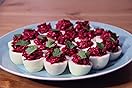
Deviled Eggs a recipe from the Bard of Bat Yam (#BardOfBatYam) , Poet Laureate of Zion (#PoetLaureateOfZion)

Image result for deviled eggs
Deviled Eggs Recipe


1 tablespoon dill seed
1 dozen eggs
1/4 cup Greek yogurt
1 teaspoon extra-virgin olive oil, plus more to serve
scant 1/2 teaspoon fine-grain sea salt
3 tablespoons finely snipped chives
2 tablespoons finely chopped chervil
1 tablespoon finely chopped dill
1/4 cup sliced almonds, toasted


Toast the dill seeds in a dry pan over medium heat until they deepen in color, a few minutes. Remove the seeds from the heat and allow them to cool, then gently crush them in a mortar and pestle.

Place the eggs in a pot and cover with cold water by half an inch or so. Bring to a gentle boil, then turn off the heat and cover. Let the pot sit for ten minutes. In the meantime, prepare a large bowl of ice water. When the eggs are done cooking, use a slotted spoon to place them into the ice bath. When the eggs are cool, remove them and crack and peel.

Cut each egg in half and use a spoon to carefully scoop the yolks into a bowl. Set the empty white aside. Mash and fluff the yolks with a fork. Add the Greek yogurt, olive oil, and salt. Continue to mix and mash until the yolk mixture is as smooth and creamy as possible. This takes a bit of time, but the result is worth it--the yolks become creamy, light, and airy.

Add the toasted dill seed and the chives, chervil, and dill to the creamed yolks, reserving a bit of each for garnish. Mix well to incorporate. Use a spoon to gather small balls of yolk, then use your finger to gently slide them into the whites. Garnish each egg with the reserved herbs, dill seed, chive flowers (if available), almonds, and a finishing drizzle of olive oil.

Serves 12.

PREP TIME: 10 MIN - COOK TIME: 10 MIN

Sunday, March 18, 2018

How to Cook Everything Completely Revised 10th Anniversary Edition 2,000 Simple Recipes for Great Food by Mark Bittman (Houghton Mifflin Harcourt) (IBECookBooks)


How to Cook Everything (Completely Revised 10th Anniversary Edition): 2,000 Simple Recipes for Great Food by [Bittman, Mark]

Today's Favorite Kitchen Companion—Revised and Better Than Ever
Mark Bittman's award-winning How to Cook Everything has helped countless home cooks discover the rewards of simple cooking. Now the ultimate cookbook has been revised and expanded (almost half the material is new), making it absolutely indispensable for anyone who cooks—or wants to. With Bittman's straightforward instructions and advice, you'll make crowd-pleasing food using fresh, natural ingredients; simple techniques; and basic equipment. Even better, you'll discover how to relax and enjoy yourself in the kitchen as you prepare delicious meals for every occasion.
"A week doesn't go by where I don't pull How to Cook Everything down from the shelf, so I am thrilled there's a new, revised edition. My original is falling apart!"

Exclusive Recipe Excerpts from How to Cook Everything

• Grilled or Broiled Chicken Kebabs
• Roasted Shrimp with Herb Sauce
• Warm Spicy Greens with Bacon and Eggs
• Author Tip: 7 Ways to Vary Chicken Kebabs [PDF]


10 Reasons You Need the New How to Cook Everything (even if you already have the original)
1. The 2000+ simple recipes will make cooking at home easier, so you can spend less and eat better.2. With 1,446 new recipes and variations such as Beer-and-Butter Chicken Wings, Roasted Corn Chowder, BLT Salad, Paella with Chicken and Chorizo, Caramelized French Toast, and Popcorn Brittle, this book provides a whole new array of recipes.
3. The many new techniques covered in this edition will help you to expand your repertoire of kitchen skills to include frosting a cake, grinding your own chili powder, or even de-boning a quail.
4. Your husband, wife, brother, sister, son, daughter, or best friend needs a little help in the kitchen (okay, maybe a lot). The new How to Cook Everything contains more expert advice like “12 Must-Have Kitchen Tools,” “Super-Easy 3-Ingredient Soups,” and “The Basics of Cutting.”
5. You trust Bittman’s no-nonsense opinions and can’t wait to read the thousands of new ones packed into this edition. He’ll even help you to select the best inexpensive fish (ex. mackerel is versatile, tasty, healthy, and plentiful; tilapia can taste kinda muddy).
6. The index of “Essential Recipes” points you to Bittman’s favorite dishes in each chapter, so there’s less reason to be intimidated by all those recipes.
7. There are more helpful lists in the new How to Cook Everything than ever before. Bittman shows how to jack up the basics with easy ideas like “4 Ways to Thicken a Sauce”, and “Infinite Ways to Season or Serve Any Grilled or Broiled Chicken Dish.”
8. With this edition’s brand new charts, it’s absurdly easy to look up the cooking times for grains, heat factor for chiles, and other need-to-know information about everything from herbs and spices to flour and noodles.
9. You know it’s cheap, easy, and fast to serve your family boneless chicken breasts every week, but sometimes you run out of ideas. That’s why you really need all the new recipes, variations, and other suggestions for chicken breasts like “11 More Ways to Vary Grilled or Broiled Boneless Chicken.”
10. There are plenty of new illustrations which incorporate more detail than many photos. They’ll show you how to use a pastry bag, how to eat crabs, and even how to puree soup using an immersion blender (it’s is way less messy than a regular blender).

 Ten years have brought many changes to the U.S. culinary landscape, and Bittman's new edition of his contemporary classic reflects that, with hundreds of recipes added, out-of-date ones banished and few lines from the holdovers left untouched. The opening chapter offers invaluable new tips on basic kitchen equipment and techniques, and in the wake of the recent vegetarian version of the book, produce and legumes are now featured earlier and with more inspired meatless recipes. Overall, Bittman's globe-trotting palate shows even better than it did in the already quite international first edition, with intriguing recipes from every corner of the world. Considering these expansions, the most important change has been to the book's user-friendliness: a proliferation of charts, lists and boxes makes much more information immediately available—hardly a page goes by without an eye-catching sidebar about technique, a handy table organizing the basics of an ingredient or dish or the myriad suggestions of variations and new ways to think about a recipe that make it the best-value all-in-one volume available. At-a-glance coding to indicate what is fast to make, what can be made ahead and what is vegetarian, plus highlighted recipes that Bittman considers essential, help ensure that even with more of everything to cook, this massive tome is navigable. Whether the first edition is on their shelves or not, home cooks of all skill levels will want to get this one. 

Saturday, February 24, 2018

Fay Drus's Caramel Apple Crumble Cheesecake


Serves 12

Ingredients
Crust

2 cups graham cracker, crumbled
⅛ cup brown sugar
⅓ cup butter

Filling
16 oz cream cheese, softened
¼ cup brown sugar
¼ cup white sugar
2 tablespoons cornstarch
1 teaspoon cinnamon
¼ teaspoon ginger
1 teaspoon vanilla extract
2 green apples, peeled and thinly sliced

Topping
¼ cup rolled oat
¼ cup flour
¼ cup brown sugar
1 teaspoon cinnamon
2 tablespoons butter, melted
caramel sauce

Preparation
Preheat oven to 350°F (180°C).
In a bowl, mix the crust ingredients.
Press into the bottom of a greased 8-inch (20 cm) springform pan.
Bake for 5 minutes.
In another bowl, mix all the filling ingredients except the apples.
In another bowl, mix all the topping ingredients except the caramel.
Spread the filling over the graham cracker crust, then layer the apple slices on top.
Sprinkle the topping mix evenly over the apple layer. .
Bake for 30 minutes
Drizzle on caramel sauce.
Enjoy!

Friday, February 23, 2018

Sarah Kaplan Drus's Homemade Cottage Cheese


Edited and adapted. Originally Sarah Kaplan Drus used milk from the herd of cows she kept in Maitland , South Africa to make and sell her home ade cottage cheese before he days of commercialization . Sarah Kaplan  Drus was the father of Morrie Drus and Ethel Drus and the grandfather of Stephen Drus ( Stephen Darori)  and Lesleigh Drus


Skill Level:

Beginner
|
Yield:

1 Pound

Aging:

None


Ingredients:
1 Gallon of Skim or 1% Milk (Not UltraPasteurized)
1 Packet C101 Mesophilic Culture
8-10 Drops Single Strength Liquid Rennet

Optional Small amount of heavy cream (UltraPasteurized is fine)

Equipment:
6+ Quart Stainless Steel Pot
Good Thermometer
Knife to Cut Curds
Spoon or Ladle to Stir Curds
Large Colander
Butter Muslin


1. Heat & Acidify Milk
Begin by heating the milk to 86°F (30°C). I do this by placing the gallon of milk in a pot or sink of very warm water. If you do this in a pot on the stove make sure you heat the milk slowly and stir it well as it heats

Once the milk is at 86°F the culture can be added. I do this by sprinkling the powder over the surface of the milk and then allow about 2 minutes for the powder to re-hydrate before stirring it in.

2.Coagulate with Rennet
Next add about 8-10 drops of single strength liquid rennet.

The milk now needs to sit quiet for 5-8 hours while the culture works and the curd forms. The thermal mass of this milk should keep it warm but during colder months wrapping this in a thick blanket or towel will keep the temperature up. It is OK if the temp drops a few degrees during this time.

When the curd is ready you will notice that it shrinks away from the sides of the pan a bit and that you may see a thin layer of whey on the top. You may even notice some cracks forming on the surface.

3.Cut Curds & Releasing Whey
Now it is time to cut the curds. Begin by making parallel cuts about 1/2 -3/4 inches apart. Then turn the pot 90 degrees and repeat ending with a checkerboard of cuts on the surface. Then with your spoon or ladle cut these crosswise until you have a pot full of curd cubes. Be gentle at this point because the curd will be very soft.

Once the curds are cut, stir them gently for 10 minutes. You should note more whey being released.

4.Cook the Curds
Now it is time to begin drying out the curds. This will be done by increasing the heat slowly to 113-115°F (45-46°C). The heat needs to be increased slowly at about 2-3°F (1°C) every 5 minutes. The total cooking time will be 60-90 minutes and may be extended to 2 hrs if the curds are still soft.

The final curds should be cooked well through and should be examined to make sure that enough moisture has been removed. A broken curd should be firm throughout and the curds should have a moderate resistance when pressed between the fingers.

When this point is reached the curds can be allowed to settle under the whey

5.Remove the Whey
The dry curds can now be transferred to a colander lined with butter muslin. They should be allowed to drain for 30 minutes and a gentle stirring will make sure that the whey drains off.

Once the curds drain for a short time the cloth can be gathered, tied securely and hung for the final drainage. This can be done for several hours and even overnight, depending on how dry you want the final cheese.

6.Chilling
The curds now need to be chilled and separated. I do this by filling the pot with cold water and submerging the curds in its cloth bundle in the cold water (this makes it easier to drain them again). Separate the curds well while in the cold water. This will drop the temperature of the curds to about 60°F (15.5°C). Then drain the curds again.

Repeat this again but with ice water and allow the curds to remain in the water for 30 minutes while separating the curds. The final curds should now be at 35-40°F (1-4°C)

7.Draining & Flavoring
Allow the curds to drain well in a colander. You may notice that the finished curds have consolidated somewhat but they are easy to separate.

You can now add a bit of salt to suit your preference (about 1/4-1/2 tsp should do). Sprinkle this over the surface evenly then mix into the curds well.

Salt is not really needed here for the process because the final acidity is enough to stop the bacteria from working. So if you are looking for salt free, this is a good cheese for you. Adding herbs or spice is a great alternative to augment the flavor in a salt-free cheese.

Your Cheese is now ready for storage but you can make any additions you like by adding fresh herbs, spices, etc.

If you would like a richer cottage cheese, then adding a small amount of Heavy Cream will make it into a much richer cheese. Let your taste be your guide on this.

8.Enjoy
You can now sit back and enjoy your very own dish of Cottage Cheese or just pack it into a sanitized container for the fridge.

That's it, time for lunch and for me to enjoy a fresh batch of Cottage Cheese with chives and cream added. Yum!

Sydney Baker’s Diplomat Pudding


Diplomat pudding is a famous dessert served in many Hungarian confectioneries, such asGerbeaud and Gellért. Its name comes from the 19th century, when it was first served as part of a diplomatic conference’s menu (at a 1908 conference on the annexation of Bosnia). Because the guests enjoyed it so much, the chef published the recipe; however, this theory is contested. Some say the expression “diplomat” refers to Nesselrode, the famous Russian diplomat who was also known for his passion for English puddings.

This is a simple yet delicious French version of bread and butter pudding served chilled. It can be made as individual puddings or in a terrine and then sliced.


Serves: 6

Preparation time: 10 minutes
Cooking time: 30 minutes

Ingredients
Pudding:
4 slices of good-quality loaf bread, crusts removed
Icing sugar, for dusting
2 tbsp golden raisins
2 tbsp sultanas
60ml dark rum
Apricot jam, warmed, to glaze
Crème anglaise:
250ml milk
250ml single cream
150g caster sugar
4 free-range eggs
1 vanilla pod, seeds scraped out
Butter, for greasing

Method
1. Cut all the bread into large dice, and spread evenly on a baking sheet. Dust with a little icing sugar and toast in a moderate oven, until crisp. Remove and set the oven to 140°C/Gas mark 2.
2. Place the raisins and sultanas in a pan and cover with cold water, bring to a boil then strain into a dish. Add the rum and leave to cool.
3. For the crème anglaise, mix the milk, cream, sugar and eggs together in a large bowl then pass through a sieve. Stir in the vanilla seeds and set aside.
4. Butter six individual-sized ramekin dishes and six pieces of foil large enough to cover each dish.
5. Stir the bread pieces into the raisin, sultana and rum mixture and divide between the ramekin dishes. Ladle the milk mixture over the bread and cover with the buttered foil and place into a bain-marie.
6. Bake for 30 minutes or until set. Leave on a wire rack to cool and then refrigerate.
7. To serve, turn out of the dishes and glaze with a little warmed apricot jam.

A checklist of Jewish Cruisine

Image result for A checklist of Jewish Cuisine

Jewish cuisine is a collection of the different cooking traditions of the Jewish diaspora worldwide. It is a diverse cuisine that has evolved over many centuries, shaped by Jewish dietary laws (kashrut), Jewish Festival, and Shabbat (Sabbath) traditions. Jewish Cuisine is influenced by the economics, agriculture, and culinary traditions of the many countries where Jewish communities have settled and varies widely throughout the world.

Broadly speaking, the distinctive styles or cuisines in their own right that may be discerned in Jewish cuisine are Ashkenazi, Sephardi, Mizrahi, Arab, Persian,Yemenite, Indian, and Latin-American. There are also distinctive dishes from Jewish communities ranging from Ethiopia to Central Asia.

Furthermore, since the establishment of the State of Israel in 1948, and particularly since the late 1970s, a nascent Israeli "fusion cuisine" has developed, adopting and adapting elements of all the aforementioned Jewish styles, new dishes based on agricultural products introduced and grown since 1948, and incorporating other Middle Eastern fare and international cuisines.

Kashrut Laws


Coarse salt for kashering meat
The laws of keeping kosher (kashrut) have influenced Jewish cooking by prescribing what foods are permitted and how food must be prepared. The word kosher is usually translated as "proper."

Certain foods, notably pork and shellfish, are forbidden; meat and dairy may not be combined, and meat must be ritually slaughtered and salted to remove all traces of blood.
Observant Jews will eat only meat or poultry that is certified kosher. The meat must have been slaughtered by a shochet (ritual slaughterer) in accordance with Jewish law and is entirely drained of blood. Before it is cooked, it is soaked in water for half an hour, then placed on a perforated board, sprinkled with coarse salt (which draws out the blood), and left to sit for one hour. At the end of this time, the salt is washed off and the meat is ready for cooking. Today, kosher meats purchased from a butcher or supermarket are usually already kashered as described above, and no additional soaking or salting is required.

According to kashrut, meat and poultry may not be combined with dairy products, nor may they touch plates or utensils that have been touched by dairy products. Therefore, Jews who observe kashrut divide their kitchens into different sections for meat and for dairy, with separate ovens, plates, and utensils (or as much as is reasonable, given financial and space constraints; there are procedures to kasher utensils that have touched dairy to allow their use for meat).

As a result, butter, milk and cream are not used in preparing dishes made with meat or intended to be served together with meat. Oil, pareve margarine, rendered chicken fat, or non-dairy cream substitutes are used instead.

Geographical dispersion


Pescaíto frito, originating from the 16th century Andalusian Jews of Spain and Portugal
The hearty cuisine of Ashkenazi Jews was based on centuries of living in the cold climate of Central and Eastern Europe, whereas the lighter, "sunnier" cuisine of  Sephardic Jews was affected by life in the Mediterranean region.

Each Jewish community has its traditional dishes, often revolving around specialties from their home country. In Spain and Portugal, olives are a common ingredient, and many foods are fried in oil. The idea of frying fish in the stereotypically British fish and chips, for example, was introduced to Britain by Sephardic Jewish immigrants.[3]In Germany, stews were popular. The Jews of Netherlands specialized in pickles,herring, butter cakes and bolas (jamrolls). In Poland, Jews made various kinds of stuffed and stewed fish along with kneidl (matzo ball) soup or lokshen (noodles). In North Africa, Jews eat couscous and tagine.

Thus, a traditional Shabbat meal for Ashkenazi Jews might include roast beef, pot roast, or chicken, carrots tzimmes, and potatoes. A traditional Shabbat meal for Sephardi Jews would focus more on salads, stuffed vine leaves, couscous and other Middle Eastern specialties.
History of Jewish cuisine

Biblical era


Emmer wheat, cultivated in biblical times


Figs, one of the most commonly mentioned fruits in the Bible

The daily diet of the ordinary ancient Israelite was mainly one of bread, cooked grains, and legumes. Bread was eaten with every meal. Vegetables played a smaller, but significant role in the diet. The Israelites drank goat and sheep’s milk when it was available in the spring and summer, and ate butter and cheese. Figs and grapes were the fruits most commonly eaten, while dates, pomegranates, and other fruits and nuts were eaten more occasionally. Wine was the most popular beverage and sometimes other fermented beverages were produced. Olives were used primarily for their oil. Meat, usually goat and mutton, was eaten rarely and reserved for special occasions, such as celebrations, festival meals, or sacrificial feasts.Game, birds, eggs and fish were also eaten, depending on availability

Most food was eaten fresh and in season. Fruits and vegetables had to be eaten as they ripened and before they spoiled. People had to contend with periodic episodes of hunger and famine. Producing enough food required hard and well-timed labor and theclimatic conditions resulted in unpredictable harvests and the need to store as much food as possible. Thus, grapes were made into raisins and wine, olives were made into oil, figs, beans and lentils were dried, and grains were stored for use throughout the year.

The cuisine maintained many consistent traits based on the main products available from the early Israelite period until the Roman period, even though new foods became available during this extended time. For example, rice was introduced during the Persian era. During the Hellenistic period, as trade with the Nabateansincreased, more spices became available, at least for those who could afford them, and more Mediterranean fish were imported into the cities. During the Roman period, sugar cane was introduced.

The symbolic food of the ancient Israelites continued to be important among Jews after the destruction of the Second Temple in 70 CE and the beginning of the Jewish Diaspora. Bread, wine, and olive oil were seen as direct links to the three main crops of ancient Israel – wheat, grapes, and olives. In the Bible, this trio is described as representing the divineresponse to human needs (Hosea 2:23-24) and, particularly, the need for the seasonal rains vital for the successful cultivation of these three crops. (Deuteronomy 11:13-14).The significance of wine, bread and oil is indicated by their incorporation into Jewish religious ritual, with the blessings over wine and bread for Shabbat and holiday meals, and at religious ceremonies such as weddings, and the lighting of Shabbat and festival lights with olive oil.

Talmudic era
Bread was a staple food, and as in the Bible, the meal is designated by the simple term "to eat bread," so the rabbinical law ordains that the blessing pronounced upon bread covers everything else except wine and dessert. Bread was made not only from wheat, but also from barley, rice, millet, lentils, etc. Many kinds of fruit were eaten. There was a custom to eat apples during Shavuot, while specific fruit and herbs were eaten on holidays and special occasions such as, Rosh Hashana . Children received nuts and roasted ears of grain especially on the evening of Passover. Olives were so common that they were used as a measure (zayit).

Meat was eaten only on special occasions, on Shabbat and at feasts. The pious kept fine cattle for Shabbat (Beẓah 16a); but various other kinds of dishes, relishes, and spices were also on the table. Deer, also, furnished meat, as did pheasant, chickens, and pigeons. Fish was eaten on Friday evening in honor of Shabbat[citation needed]. Pickled fish was an important article of commerce, being called "garum" among the Jews, as among the Greeks and Romans. Pliny says expressly of a "garum castimoniale" (i.e., kosher garum) that it was prepared according to Jewish law. A specific type of locusts were eaten. Eggs were so commonly eaten that the quantity of an egg was used as a measure.

Structure of meal
The first dish was a pickled starter to stimulate the appetite, followed by the main meal, which ended with a dessert, called in Greek θάργημα. Afiḳomen is used in the same sense. Tidbits (parperet) were eaten before and after the meal (Ber. vi. 6). Wine was flavored with myrrh or with honey and pepper, the mixture being called conditum. There was vinegar wine, wine from Amanus, and Cilicia, red wine from Saron, Ethiopian wine, and black wine.Certain wines were considered good for the stomach, others not. There was beer from Egypt called zythos (Pes. iii. 1), and beer made from a thorn Spina regia. Emphasis was placed on drinking with the meal as "eating without drinking means suicide".

Middle Ages


Lokshen kugel


Yaprak stuffed vine leaves
The Jews were so widely scattered in the Middle Ages that it is difficult to give a connected account of their mode of living as regards food. In Arabic countries the author of the Halakhot Gedolot knew some dishes that appear to have been specific Jewish foods, e.g., "paspag", which was, perhaps, biscuit; according to the Siddur Amram, the well-known "ḥaroset" is made in those countries from a mixture of herbs, flour, and honey (Arabic,"ḥalikah"). Maimonides, in his "Sefer Refu'ot",mentions dishes that are good for health. He recommends bread baked from wheat that is not too new, nor too old, nor too fine, further, the meat of the kid, sheep, and chicken, and the yolks of eggs. Goats' and cows' milk is good, nor are cheese and butter harmful. Honey is good for old people; fish with solid white flesh meat is wholesome; so also are wine and dried fruits. Fresh fruits, however, are unwholesome; and he does not recommend garlic or onions.

There is detailed information about Italian Jewish cookery in the book Massechet Purim. It discusses pies, chestnuts, turtledoves, pancakes, small tarts, gingerbread, ragouts, venison, roast goose, chicken, stuffed pigeons, ducks, pheasants, partridges, quails, macaroons, and salad. These were considered luxuries. The oppressed medieval Jews enjoyed large meals only on Shabbat, festivals, circumcisions, and weddings. For example, the Jews of Rhodes, according to a letter of Ovadiah Bartinura, 1488, lived on herbs and vegetables only, never tasting meat or wine. In Egypt, however, meat, fish, and cheese were obtainable, in Gaza, grapes, fruit, and wine. Cold dishes are still relished in the East. Generally, only one dish was eaten, with fresh bread daily.

Some Jewish dishes frequently mentioned in Yiddish literature from the twelfth century onward are brätzel,lokshen,pasteten, fladen, beleg. Barscht or borshtsh soup is a Ukrainian beet soup, best known are the berkes orbarches eaten on Shabbat, and shalet, which Heine commemorates,and which the Spanish Jews called ani. Shabbat pudding, kigl or kugel in Yiddish, is also well known.

Modern era
Most of the dishes cooked by Jewish people of Eastern Europe origin are akin to those of the nations among whom they dwelled, and in much of Europe (including most of the English-speaking world) is the dominant style associated with "Jewish cooking"; substitutions were made to accommodate the dietary laws. Hence, dishes which Gentiles make with pork are made with veal or chicken; chicken fat (or, more modernly, hydrogenated vegetable oil such as Crisco) is used in place of lard. Thus the kasha and blintzes of the Russian Jews, the mamaliga of the Romanians, the paprika of the Hungarians, are dishes adopted by the Jews from their gentile neighbors. Only on religious and ceremonial occasions did they cook special Jewish dishes. In the United States, in particular, Jewish cooking (and the cookbooks that recorded and guided it) evolved in ways that illuminate changes in the role of Jewish women and the Jewish home.

Jewish cuisine variations

Ashkenazi

Origins

While Ashkenazi cuisine as it is known today is largely based within the context of American-Jewish and Ashkenazi-Israeli food, much of the culinary traditions of Ashkenazi Jews sprung from Eastern Europe. After having been expelled from Western Europe in the Middle Ages, Jews were forced to live in poverty and thus, were limited in terms of ingredients. Dishes were made with more sparse components; they weren't heavily spiced and ingredients that were more flavorful had to be used sparingly. This is often why some dishes in Ashkenazic cuisine are known for being blander than dishes in Sephardic or Mizrahi cuisine.

Fish

[

Gefilte fish with carrot slices and chrain
The Jewish love of fish goes back to ancient times. With kosher meat not always available, fish became an important staple of the Jewish diet. In Eastern Europe it was sometimes especially reserved for Shabbat. As fish is not considered meat in the same way that beef or poultry are, it can also be eaten with dairy products (although some Sefardim do not mix fish and dairy). Even though fish is parve, when they are served at the same meal, Orthodox Jews will eat them during separate courses, and wash (or replace) the dishes in between. Gefilte fish and lox are popular in Ashkenazi cuisine.
Gefilte fish (from German gefüllte "stuffed" fish) was traditionally made by skinning the fish steaks, usually German carp, de-boning the flesh, mincing it and mixing with finely chopped browned onions (3:1), eggs, salt, pepper, and vegetable oil. The fish skin and head were then stuffed with the mixture and poached.

A more common commercially packaged product found today is the "Polish" gefilte fish patties or balls, similar to quenelles, where sugar is added to the broth, resulting in a slightly sweet taste.] Strictly speaking they are the fish filling, rather than the complete filled fish.This method of serving evolved from the tradition of removing the stuffing from the skin, rather than portioning the entire fish into slices before serving.
While traditionally made with carp, gefilte fish may also be made from any large fish: cod, haddock, or hake in the United Kingdom, carp or pike in France. In United States whitefish is added to the above as a mince.
The combination of lox (smoked salmon) or whitefish with bagels and cream cheese is a traditional breakfast or brunch in American Jewish cuisine, made famous at New York delicatessens.
Gehakte hering (chopped herring), a popular appetizer on Shabbat, is made by chopping skinned, boned herrings with hard-boiled eggs, onions, apples, sugar, pepper, and a dash of vinegar.

Soups


Borscht with sour cream


Fried Jewish artichokes
A number of soups are characteristically Ashkenazi, one of the most common of which is chicken soup (יױך, yoykh), traditionally served on Shabbat, holidays, and special occasions. The soup may be served with noodles (lokshen in Yiddish) or rice. It is often served with Shkedei marak (lit. "soup almonds" – croutons popular in Israel), called "mandlen" or "mandlach" in Yiddish. Other popular ingredients arekreplach (dumplings) and kneidlach (matzo balls) – a mixture of matzo meal, eggs, water, melted fat, pepper and salt. Some reserve kneidlach for Passover andkreplach for other special occasions.

In the preparation of a number of soups, neither meat nor fat is used. Such soups formed the food of the poor classes. An expression among Jews of Eastern Europe,soup mit nisht (soup with nothing), owes its origin to soups of this kind. Soups such as Borsht were considered a staple in Ukraine. Soups like krupnik were made of oatmeal, potatoes, and fat. This was the staple food of the poor students of the yeshivot; in richer families, meat was added to this soup.

At weddings, "golden" chicken soup was often served. The reason for its name is probably the yellow circles of molten chicken fat floating on its surface. Today, chicken soup is widely referred to (not just among Jews) in jest as "Jewish penicillin," and hailed as a cure for the common cold.

There are a number of sour soups in the borscht category. One is kraut or cabbage borscht, made by cooking together cabbage, meat, bones, onions, raisins, sour salt (citric acid), sugar, and sometimes tomatoes. Beet borsht is served hot or cold. In the cold version, a beaten egg yolk may be added before serving, and each bowl topped with a dollop of sour cream. This last process is called farweissen (to make white).

Bread and cake


Challah bread
The dough of challah is often shaped into forms having symbolical meanings; thus on Rosh Hashanah rings and coins are imitated, indicating "May the new year be as round and complete as these"; for Hosha'na Rabbah, bread is baked in the form of a key, meaning "May the door of heaven open to admit our prayers." The homentash, a triangular cookie or turnover filled with fruit preserves (lekvar) or honey and black poppy seedpaste, is eaten on the Feast of Purim. It is said to be shaped like the hat ofHaman the tyrant. The mohn kihel is a circular or rectangular wafer sprinkled with poppy seed. Pirushkes, or turnovers, are little cakes fried in honey or dipped in molasses after they are baked. Strudel is served for dessert. Kugels are prepared from rice, noodles or mashed potatoes.

In Eastern Europe, the Jews baked black ("proster," or "ordinary") bread, white bread, and challah. The most common form is the twist ("koilitch" or "kidke" from the Romanian word "încolăci" which means "to twist"). The koilitch is oval in form, and about one and a half feet in length. On special occasions, such as weddings, the koilitch is increased to a length of about two and a half feet. The bagel, which originated from the Eastern Europe bublik, is a popular Ashkenazi food.

Meat and fats
Gebratenes (roasted meat), chopped meat, and essig fleisch (vinegar meat) are favorite meat recipes. The essig or, as it is sometimes called, honig or sauerbraten, is made by adding to meat which has been partially roasted with some sugar, bay-leaves, pepper, raisins, salt and a little vinegar.

A popular dish among Ashkenazim, as amongst most Eastern-Europeans, is Pierogi (which are related to but distinct fromKreplach), often filled with minced beef.
The rendered fat of geese and chickens, known as schmaltz, is kept in readiness for cooking use when needed. Gribenes or "scraps," also called griven, the cracklings left from the rendering process were one of the favorite foods in Eastern Europe.Gribenes is eaten spread on bread.

A spread of chopped liver, prepared with onions and often including gribenes, is a popular appetizer, side dish, or snack, especially among Jews on the eastern coast of North America. It is usually served with rye bread or crackers.
Stuffed cabbage, also known as the "cabbage roll" is also a European Jewish dish that emerged from more impoverished times for Jews. Because having a live cow was more valuable than to eat meat in the Middle Ages, Jews used fillers such as breadcrumbs and vegetables to mix with ground beef. This gave the effect of more meat that was stuffed into the cabbage leaves.

Sweets and confections[
Teiglach, traditionally served on Rosh Hashanah, the Jewish New Year, consists of little balls of dough (about the size of a marble) drenched in a honey syrup. Ingberlach are ginger candies shaped into small sticks or rectangles.

In Europe, jellies and preserves made from fruit juice were used as pastry filling or served with tea. Among the poor, jelly was reserved for invalids, hence the practice of reciting the Yiddish saying Alevay zol men dos nit darfen (May we not have occasion to use it) before storing it away.

Because it was easy to prepare, made from inexpensive ingredients and contained no dairy products, compote became a staple dessert in Jewish households throughout Europe and was considered part of Jewish cuisine.

Side dishes


Carrot tzimmes
Tzimmes consists generally of cooked vegetables or fruits, sometimes with meat added. The most popular vegetable is the carrot (mehren tzimes), which is sliced. Turnips were also used for tzimmes, particularly in Lithuania. In southern Russia, Galicia, and Romania tzimmes was made of pears, apples, figs, prunes or plums (floymn tzimes).
Kreplach, similar to Russian "pelmeni" are ravioli-like dumplings are made from flour and eggs mixed into a dough, rolled into sheets, cut into squares and then filled with finely chopped, seasoned meat or cheese. They are most often served in soup, but may be fried. Kreplech are eaten on various holidays, among them Purim andHosha'na Rabbah.
Sephardi and Mizrahi


Stuffed Peppers


Potato burekas
The exact distinction between traditional Sephardic and Mizrahi cuisines can be difficult to make, due to the intermingling of the Sephardi diaspora and the Mizrahi Jews who they came in contact with. As a general rule, however, both types reflect the food of the local non-Jewish population that each group lived amongst. The need to preserve kashrut does lead to a few significant changes (most notably, the use of olive oil instead of animal fat is often considered to be a legacy of Jewish residency in an area, due to the fact that olive oil may be eaten with milk, unlike animal fat). Despite this, Sephardic and Ashkenazic concepts of kosher differ; perhaps the most notable difference being that rice, a major staple of the Sephardic diet, is considered kosher for Passover but is forbidden kitniyot for most Ashkenazim.

Sephardic cuisine in particular is known for its considerable use of vegetables unavailable to the Ashkenazim of Europe, including spinach, artichokes, pine nuts, and (in more modern times) squash. The cooking style is largely Middle Eastern, with significant admixtures of Spanish, Italian, and North African flavors.
Shabbat and holiday dishes

Shabbat


Chamin/Cholent
Good food is an important part of the mitzvah of "oneg Shabbat" ("enjoying Shabbat"). Hence much of Jewish cuisine revolves around Shabbat.

As observant Jews do not cook on Shabbat, various techniques were developed to provide for a hot meal on Shabbat day. One such dish is "cholent" or "chamin," a slow-cooked stew of meat, potatoes, beans and barley (although there are many other variations). The ingredients are placed in a pot and put up to boil before lighting the candles on Friday night. Then the pot is placed on a hotplate, traditional "blech" (thin tin sheet used to cover the flames, and on which the pot is placed), or in a slow oven and left to simmer until the following day.

A prominent feature of Shabbat cookery is the preparation of twists of bread, known as "challahs" or (in southern Germany, Austria and Hungary) "barches." They are often covered with seeds to representmanna, which fell in a double portion on the sixth day.[citation needed]

Another Shabbat dish is calf's foot jelly, called p'tsha or šaltiena in Lithuania and galarita, galer, galleh,or fisnoge in Poland. Beef or calf bones are put up to boil with water, seasonings, garlic and onions for a long time. It is then allowed to cool. The broth then jells into a semi-solid mass, which is served in cubes. Drelies, a similar dish originating in south Russia and Galicia is mixed with soft-boiled eggs and vinegar when removed from the oven, and served hot. In Romania it is called piftie, in Serbia pihtije; it is served cold, with garlic, hard boiled eggs and vinegar sauce or mustard creme and considered a traditional dish in the winter season.

Kugel is another Shabbat favorite, particularly lokshen kugel, a sweet baked noodle pudding, often with raisins and spices. Non-sweet kugels may be made of potatoes, carrots or a combination of vegetables.

Traditional noodles—lokshen—are made from a dough of flour and eggs rolled into sheets and then cut into long strips. If the dough is cut into small squares, it becomes farfel. Both lokshen and farfel are usually boiled and served with soup.

Rosh Hashana


Five varieties of fruit preserves for Rosh Hashana, Libyan tradition: (clockwise from top): apple, quince, plum, squash, orange (in the center)
On Rosh Hashana, the Jewish New Year, a variety of symbolic foods are eaten:
Apples and honey—for a sweet year
Round Challah (for Ashkenazi Jews)
Tzimmes (for Ashkenazi Jews)
Teiglach (for Ashkenazi Jews)
Honey cake
Pomegranates – for a year of many blessings (as many as there are seeds in a pomegranate). Pomegranates are also mentioned multiple times in the Tanakh.
Fish, with head, for a successful year in which we are the "head," not the "tail."

Yom Kippur
Yom Kippur is a fast day. The pre-fast meal, called seuda hamafseket, usually consists of foods that are digested slowly and are not highly spiced, to make fasting easier and prevent thirst.

Sukkot


Latkes with smetana
On Sukkot meals are eaten outside in the sukkah, a thatched hut built specially for the holiday. Often fresh fruits are eaten also, which are woven into the roof of the thatched hut
.
Chanukah
It is customary to eat foods fried in oil to celebrate Chanukkah. Eating dairy products was a custom in medieval times.
Latkes—Potato pancakes (may be topped with sour cream or applesauce) (Ashkenazi food)
Sufganiyot- Jelly doughnuts (in Israel)

Purim


Purim hamantaschen
Hamantaschen - triangular pastries traditionally filled with poppy seeds or prunes
Berkouks
Fazuelos

Passover


Handmade shmura matzo
Passover celebrates The Exodus from Egypt where it is said the Jewish people left so quickly, there was no time for their bread to rise. Commemorating this event, Jews eat matzo and abstain from bread, cakes and other foods made with yeast and leavening agents. In modern times, rabbinical authorities permit the use of chemical leavening, such as baking powder. Matzo is a staple food during the holiday and used as an ingredient of many Passover dishes. Kneidlach (matzo ball) soup is traditional. Fish is coated with matzo meal before frying, and cakes and puddings are made with potato starch and matzo meal. Jewish cooks use both matzo meal and potato starch for pastries during Passover. Whisked whole eggs or egg whites are frequently used to make pastries without leavening agents, such as angel and sponge cakes (potato starch replacing cake flour) and coconut and almond macaroons.

Passover foods vary distinctly between Sephardic and Ashkenazic communities. Ashkenazim exclude rice, while it is served by Sephardim. Matzo is traditionally prepared from water and flour only, but there are other varieties, such as egg matzo, which may also contain fruit juice. At the seder, it is customary in some communities, particularly among strictly Orthodox Jews, to use handmade shmura matzo, which has undergone particularly strict kashrut supervision.

The exclusion of leaven from the home has forced Jewish cooks to be creative, producing a wide variety of Passover dishes that use matzo meal and potato as thickeners. Potato flour is largely used in cakes along with finely ground matzo meal and nuts.


Soup with matso balls
Popular Ashkenazi dishes are matzo brei (crumbled matzo with grated onion, fried with scrambled egg), matzo latkes (pancakes) and chremslach (also called crimselor gresjelies; matzo meal fritters). Wined matzo kugels (pudding) have been introduced into modern Jewish cooking. For thickening soups and sauces at Passover fine matzo meal or potato flour is used instead of flour: for frying fish or cutlets, a coating of matzo meal and egg, and for stuffing, potatoes instead of soaked bread.

"Noodles" may be made by making pancakes with beaten eggs and matzo meal which, when cooked, are rolled up and cut into strips. They may be dropped intosoup before serving. Matzo kleys(dumplings) are small balls made from suet mixed with chopped fried onions, chopped parsley, beaten egg, and seasonings, dropped into soup and cooked.

Shavuot
Dairy foods are traditionally eaten on Shavuot.
Blintzes
Cheesecake

Tisha B'Av
Tisha B'av is a fast day, preceded by nine days when Jews traditionally do not eat meat, except on Shabbat. Thus dairy and vegetarian dishes are prepared during this time of year. The meal before the fast (the seudat mafseket) also consists of dairy foods and usually contains dishes made from lentils and eggs, both ancient Jewish symbols of mourning. Some Ashkenazi Jews eat hard-boiled eggs sprinkled with ashes to symbolize mourning.