Monday, November 13, 2017

Goocha Not kosher 171 Dizengoff St., Tel Aviv Tel: (03) 522-2886

Image result for goocha tel aviv

Quite by chance, I recently discovered one of the secrets to the success of the popular Goocha Seafood and Bar chain. At an outing to the Ashdod headquarters and impressive showroom of Cancun, one of Israel’s leading importers of seafood, the owner of the company told me that Cancun is a partner with Goocha. The sight of the beautiful fish and seafood displayed on the glittering ice, together with this new information, was all the motivation I needed to schedule a visit to Goocha.

“Our association with Cancun not only gives us preferred access to the finest seafood,” says Goocha chef Eitan Sasson, “but it also enables us to offer our customers the best possible prices.”

Sasson has been with Goocha since it was founded in 2004 as a small eatery on Ben-Gurion Street in Tel Aviv. Since then, it has expanded at its original location to occupy the entire corner at Dizengoff and opened two more restaurants: one in Ramat Hahayal and The Diner by Goocha on Ibn Gvirol.

According to Sasson, the menu has expanded as well, now encompassing 12 categories.


“We specialize in mussels,” he adds. “We sell half a ton of mussels a year.” In fact, Goocha is known for its Sunday night mussels special: half a kilo of mussels, fries and draft beer for NIS 85.

Justifying the word “bar” in the restaurant’s name, Goocha has a separate bilingual wine and alcohol menu, including seven specialty cocktails. Our waiter recommended the Citrus Mojito (NIS 42), which turned out to be far from any semblance of a mojito worthy of the name, since it did not contain even a bit of rum. Nonetheless, this blend of vodka, red (i.e., blood) orange liqueur, lemon and orange, garnished with mint, was excellent.

The house sangria (NIS 39) – red wine and orange liqueur, with slices of orange and apple and a cinnamon stick – was equally good.

Refreshingly cool in the summer, it can also be ordered warm in the winter.

We embarked on the food portion of the menu with the first of several of chef Sasson’s personal recommendations: tuna tartare with tobiko and herbs (NIS 53). The exceedingly fresh chopped raw tuna studded with the premium roe was served on a citrus vinaigrette that enhanced the fish mixture nicely.

Our second starter was grilled calamari with goat cheese (NIS 54).

Once again, the freshness of the calamari was evident, while the accompanying zesty cheese, tomato, olives, red onion and jalapeno pepper infused it with the flavors of Provençal, with an added touch of heat. We mopped up the terrific dressing with the dark house bread.

The list of mixed seafood dishes on the menu presented us with some tough choices to make, but the scallops and shrimp in truffle cream (NIS 75) eventually won out.

We were then quite startled to discover what the menu left out of the description: The seafood was actually buried under both a mound of mashed potatoes and a pile of French fried onions. Despite the overwhelming amount of carbohydrates, and slight dearth of shrimp, the scallops that practically melted in the mouth and the decadently rich sauce rewarded us for our selection.

Our final main course, from the pasta sea section of the menu, combined the best of both undersea worlds: shellfish plus the fins-and-scales variety. The sea bream and seafood on butter and herb gnocchi (NIS 83) paired perfectly grilled filleted fish with shrimp and mussels on a bed of plump pillows of potato pasta.

This dish gave us the opportunity to enjoy Goocha’s famed mussels, and the large, meaty, briny molluscs lived up to their billing.

The dessert menu contained some discrepancies between the English and Hebrew versions. The former had frustratingly skimpier descriptions than the latter.

Nonetheless, the mascarpone cheesecake (NIS 39) and caramel flan (NIS 38) were both superlative finales to our filling meal: light and sweet confections with welcome crunchy counterpoints – pistachio nuts sprinkled on the cheese mousse and an alfajor cookie on the flan, respectively.

To further leverage its connection with Cancun, Goocha offers a business lunch on weekdays (a starter, bread and a drink for NIS 15 added to the cost of the main course) and a special sea bream meal weekdays until 6 p.m. for NIS 69.


Thursday, November 9, 2017

Sydney Baker's Latvian Styled Onions


Latvian cuisine

Latvian cuisine typically consists of agricultural products, with meat featuring in most main meal dishes. Fish is commonly consumed due to Latvia's location on the east coast of the Baltic Sea.

Latvian cuisine has been influenced by other countries of the Baltic rim.] Common ingredients in Latvian recipes are found locally, such as potatoes, wheat, barley, cabbage, onions, eggs and pork. The Latvian cuisine is markedly seasonal - due to pronounced four seasons in the climate of Latvia, each time of the year has its own distinctive products, tastes and flavors. Latvian food is generally quite fatty, and uses few spices.

Contemporary Latvians usually eat three meals a day. Breakfast is normally light and usually consists of sandwiches or an omelette, with a drink, often milk. Lunch is eaten from noon to 3 p.m. and tends to be the main meal of the day; as such it can include a variety of foods, and sometimes also soup as an entrée and a dessert. Supper is the last meal of the day, with some choosing to eat another large meal. Consumption of ready-made or frozen meals is now common.

Common foods and dishes

Latvian cuisine is typical of the Baltic region and, in general, of northern countries. The food is high in butter and fat while staying low in spices except for black pepper, dill or grains/seeds, such as caraway seeds. Latvian cuisine originated from the peasant culture and is strongly based on crops that grow in Latvia's maritime, temperate climate. Rye or wheat, oats, peas, beets, cabbage, pork products and potatoes are the staples. Meat features in most main meal dishes. But fish also is commonly consumed due to Latvia's location on the east coast of the Baltic Sea: smoked and raw fish are quite common. Latvian cuisine offers plenty of varieties of bread and milk products, which are an important part of the cuisine. A lot of popular dishes in contemporary Latvia come directly from other countries, at times as a result of their historical domination. For example dishes adopted from Soviet cuisine include siļķe kažokā (herring and beetroot salad), various dumplings, šašliks (shashlik) and many others.

The most popular alcoholic beverage is beer.A national liquor is Riga Black Balsam.


This is one of a number of historical recipes I am posting from Sydney Baker  that he used at his Restaurant “Sydney’s” in Cape Town. Sydney. Sydney Baker was one of the founders of Fair Lady Magazine and the Fashion Director for over 25 years . He died in Cape Town on November 30th 2013 . He was 80 years old.

Ingredients:

2 tablespoons bacon drippings
5 large onions, sliced medium-thick
1/2 cup toasted breadcrumbs
melted butter
1/2 cup grated mild cheese
salt
pepper

Directions:

1.Preheat oven to 350°F.
2.Heat bacon drippings in a large skillet.
3.Add onions and saute until lightly browned.
4.Place onions in a baking dish and sprinkle with bread crumbs.
5.Drizzle with a little melted butter.
6.Sprinkle cheese on top.
7Bake about 15-20 minutes, or until browned.

Serves 4

Sarah Kaplan Drus's Potato Kugal


The History of the Kugal 

Kugel (קוגל kugl, pronounced IPA: [ˈkʊɡl̩]) is a baked pudding or casserole, most commonly made from egg noodles(Lokshen kugel) or potato. It is a traditional Ashkenazi Jewish dish, often served on Shabbat and Yom Tov.

Etymology

The name of the dish comes from the Middle High German kugel meaning "sphere, globe, ball"; thus the Yiddish name likely originated as a reference to the round, puffed-up shape of the original dishes (compare to German Gugelhupf—a type of ring-shaped cake). Nowadays, however, kugels are often baked in square pans.

While Litvaks (Jews from Lithuania, northern Poland and northern Russia) call the pudding "kugel," Galitzianers (Jews from southeastern Poland and the western Ukraine) call it "kigel." 

History

The first kugels were made from bread and flour and were savory rather than sweet. About 800 years ago, cooks in Germany replaced bread mixtures with noodles or farfel.[3] Eventually eggs were incorporated. The addition of cottage cheese and milkcreated a custard-like consistency common in today's dessert dishes. In Poland, Jewish homemakers added raisins, cinnamonand sweet curd cheese to noodle kugel recipes. In the late 19th century, Jerusalemites combined caramelized sugar and black pepper in a noodle kugel known as "Yerushalmi kugel" or "Jerusalem kugel," which is a commonly served at Shabbat kiddushes and is a popular side dish served with cholent during Shabbat lunch.

In Romania, this dish is called Budinca de Macaroane/Paste Fainoase (Maccaroni/Pasta Pudding), and it is a traditional Romanian dish. In certain villages throughout the country it is known as "Baba Acolo". It is made with or without cheese, but it most always includes raisins.
Savory kugel may be based on potatoes, matzah, cabbage, carrots, zucchini, spinach or cheese.

A similar traditional Belarusian dish is potato babka.

In Lithuania, this dish is called Kugelis. It is baked potato pudding and it is a traditional Lithuanian dish. The main ingredients are potatoes, onions, and eggs. It may be spiced with salt, black pepper, bay leaves, and/or marjoram.


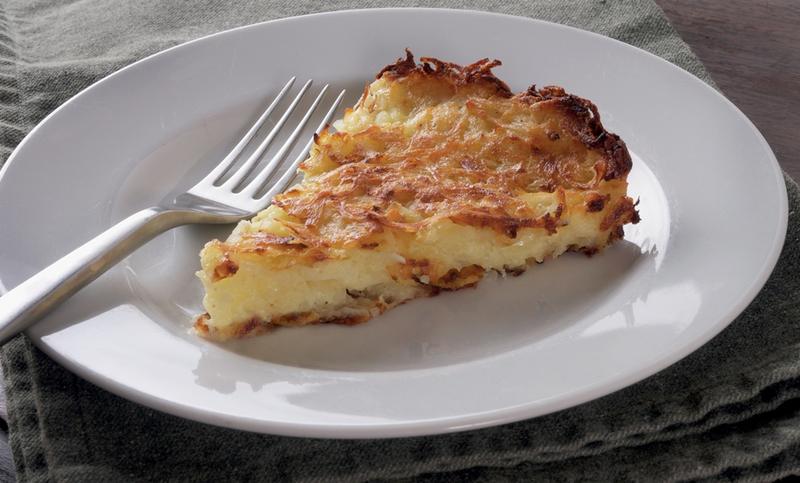
This is simply hash browns given amazing flavor and crispness from the schmaltz. Potato kugel is no different from latkes, except that schmaltz is added to the mixture here, whereas latkes are shaped into patties and then fried in schmaltz. (Potato kugel is considerably different from noodle kugel, which uses cheese and more eggs and is sweetened with sugar and spices.) The eggs allow you to call this a kugel, but it’s basically just a giant latke—every bit as tasty, twice as easy, and the cook can sit down with everyone else and eat it hot.

I shred potatoes by hand on a box grater because it’s faster than cleaning up the food processor, but feel free to use a processor fitted with the shredder blade.

I like to cook this kugel in a 12-inch/30-centimeter cast-iron skillet because it’s so convenient and makes a great serving vessel, but a baking dish will work perfectly fine. Leftovers can be reheated in a toaster oven; try serving leftovers with a poached egg on top!

Ingredients

1 large Spanish onion
3 large russet potatoes, peeled and submerged in cold water
1/2 cup/120 grams schmaltz
1 1/2 teaspoons kosher salt
1 1/2 teaspoons freshly ground black pepper
2 large eggs, beaten
2 tablespoons/15 grams matzo meal

Directions
Preheat the oven to 400°F/200°C.
  1. Grate the onion on the medium holes of a box grater. With your hands, squeeze out as much liquid as possible and put the onion in a large bowl. Grate the potatoes. After each potato, put the shreds in a kitchen towel and squeeze out as much liquid as possible, then toss it with the onion to prevent it from turning brown.
  2. Grease a large skillet or baking dish with a little schmaltz. Add the remaining schmaltz to the potato mixture and toss well.
  3. Add the salt and pepper to the eggs and beat them some more to distribute the seasoning. Add the eggs to the potatoes and onion and toss to thoroughly mix everything. Add the matzo meal and mix to incorporate. Transfer the mixture to the skillet or baking dish and smooth out the surface to make it level.
  4. Bake the kugel until it’s cooked through and golden brown and crisp on top, about 1 hour. This can be completed a half hour before you want to serve it and then reheated in the oven for 10 minutes before serving.
Serves 6 to 8.

Fay Drus's Cheese Cake Topped with Fresh Strawberries ( Variation)


Original recipe makes 1 – 9 or 10 inch springform pan
1 1/2 cups graham cracker crumbs
1/2 cup white sugar
1/4 cup butter, melted
5 (8 ounce) packages cream cheese, softened
5 eggs
2 egg yolks
1 3/4 cups white sugar
1/8 cup all-purpose flour
1/4 cup heavy whipping cream

Directions

Preheat oven to 400 degrees F (200 degrees C).
Mix the graham cracker crumbs, 1/2 cup of the white sugar, and the melted butter together. Press mixture into the bottom of one 9 or 10 inch springform pan.
In a large bowl, combine cream cheese, eggs and egg yolks; mix until smooth. Add the remaining 1 3/4 cups white sugar, the flour and the heavy cream. Blend until smooth. Pour batter into prepared pan.
Bake at 400 degrees F (200 degrees C) for 10 minutes, then turn oven temperature down to 200 degrees F (100 degrees C) and continue baking for 1 hour, or until filling is set. Let cheesecake cool, then refrigerate.

Friday, November 3, 2017

Raisa (Restaurant) 8 Rabbi Yohanan St., Jaffa Tel: 052-449-9188


Dining is warm and wonderful at this Jaffa gem
Image result for Raisa (Restaurant) 8 Rabbi Yohanan St., Jaffa


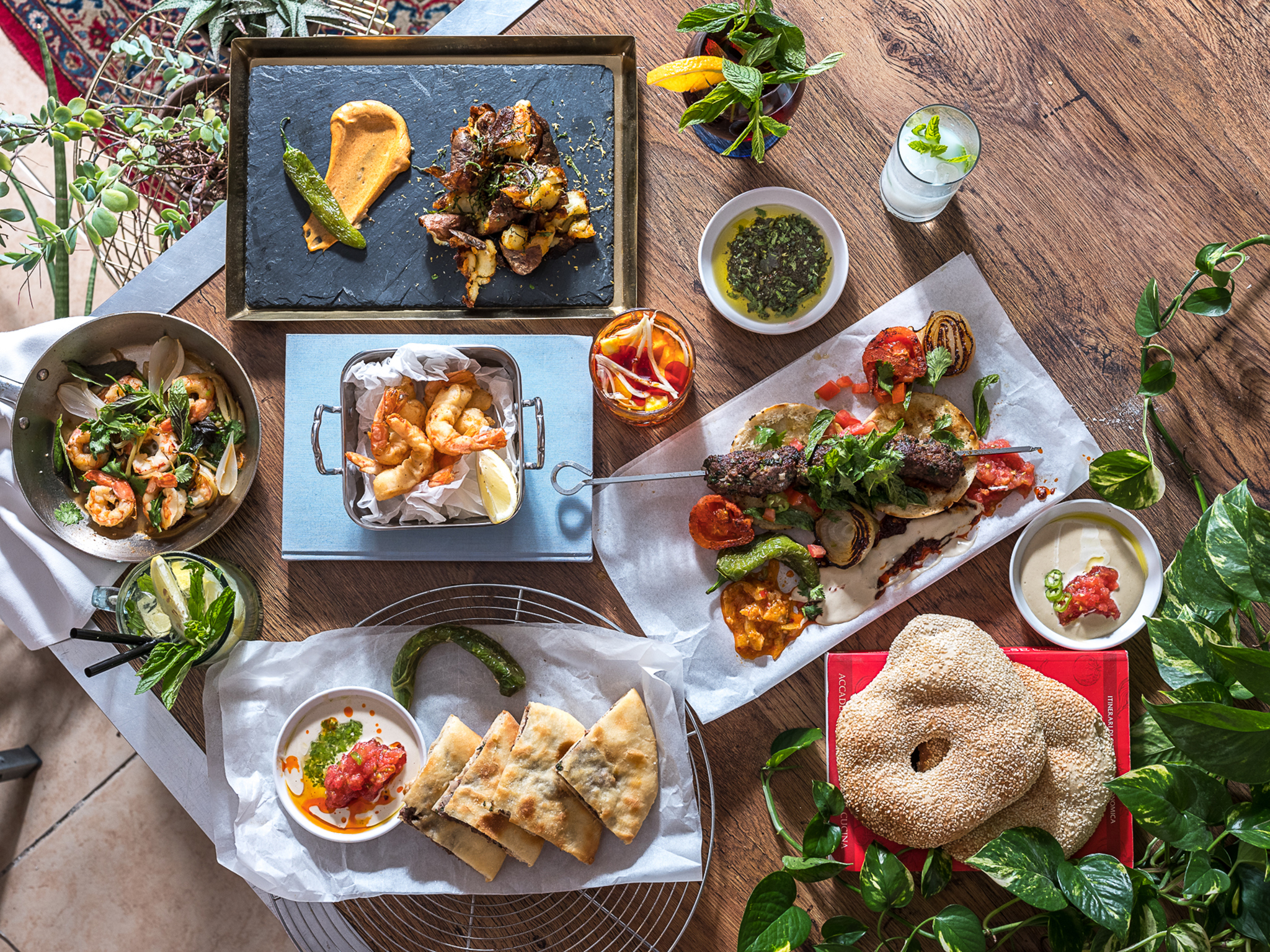
Situated in the heart of the Jaffa Flea Market (Shuk Hapishpishim), Raisa is the kind of restaurant that everyone wants in their neighborhood. Chef Uri Levy combines the finest in locally sourced ingredients for a gastronomic sensation that, together with a stylish, relaxed atmosphere, makes a visit there an appealing dining experience.

Upon entering, one is immediately struck by the warm, welcoming atmosphere of the restaurant. There is a large bar in the center – that is packed on weekend nights – and seating areas inside and on the sidewalk.

Sitting outside, my dining companion and I were immediately served delicious cocktails, setting the tone for an evening of fine food.

We began with the lamb cigars (NIS 38). Served with tehina, the cigars were crisp and crunchy on the outside, while the meat inside was juicy and tender. This was comfort food at its best.

Next up was the roasted cauliflower with black tehina (NIS 44). Roasted perfectly, the cauliflower was buttery in tenderness, and the florets were nicely browned and had a bit of crispiness.

This was followed by tuna tartare served with eggplant and herbs on thin slices of pita (NIS 56). The dish was very nicely flavored, yet subtle enough to let the fish speak for itself.

We were then presented with fish carpaccio with watermelon, mint, cilantro, shallots and chili (NIS 56).

The fish was so fresh that it melted in the mouth, and the chili added a snappy textural kick, which made a nice contrast to the sweet watermelon.

After a bit of a breather and two more cocktails, it was on to the main dishes. First up was the lamb and chicken shwarma served on a flatbread with tehina, tomatoes and chili (NIS 68). The meat was cooked to perfection, moist, juicy, well seasoned, with every ingredient playing off each other like a chamber ensemble. It looked like the shwarma was going to be difficult to eat and I was worried I’d end up dripping it all over myself, but it was much easier to eat than it looked.

This was followed by a Middle Eastern classic, arayes: grilled pita stuffed with rich, seasoned minced lamb (NIS 58). Surrounded by creamy tehina, it was delicious and surprisingly not greasy (unlike how minced lamb often tends to be).

Last, we were presented with a grilled tuna fillet on a bed of artichoke, olives, capers, mangold tomatoes in a crab sauce. The tuna was crisp on the outside, but the inside was absolutely perfect: not a bit overdone nor underdone. As I cut into it, the fish fell apart on the knife and slowly melted on the tongue.

For dessert, we shared the homemade cheesecake (NIS 36).

The consistency and texture were on point, and I consider myself to be a bit of a cheesecake snob.

Overall, it was a delicious dinner.

Everything we had was fresh, flavorful and prepared with just the right amount of ingredients.

Service was exceptional. The wait staff were constantly attentive to filling our water glasses, and when a dish was finished, the plate was whisked off the table. A wonderful place for an intimate date or a large, lively group.

Raisa (Restaurant) 8 Rabbi Yohanan St., Jaffa Tel: 052-449-9188 ( not kosher)

Saturday, October 14, 2017

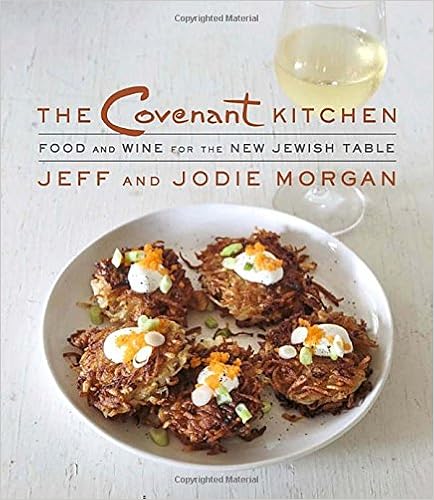
Fish Soup with Matzo Balls and Aioli from The Covenant Kitchen: Food and Wine for the New Jewish Table Hardcover – March 3, 2015 by Jeff Morgan


Fish soup Matzoh Balls
Fish Soup with Matzo Balls and Aioli | Excerpted from The Covenant Kitchen by Jeff and Jodie Morgan
We love fish soup. One long-ago Passover, we suddenly wondered, “Why don’t we make matzo ball soup with fish stock instead of chicken stock?” This saffron-colored variation on a traditional theme has now become our standard.
You’ll probably want to double the ingredients for Passover (and remember to use the Passover recipe for the aioli, with lemon juice instead of mustard), but you don’t need to wait for the holiday to enjoy this lovely dish. It’s not hard to make and will provide lots of pleasure for you and your dining companions at any time of the year. (You can also enjoy it without the matzo balls.)
The list of ingredients may seem long, but most of them are simply thrown in the pot, boiled, and then strained. You will also need to purchase a 3-to 4-pound ocean fish. (Remember that kosher fish must have fins and scales.) If you are using the fish head, don’t bother removing the gills, as some cookbooks traditionally advise. Contrary to popular belief, we haven’t found they add any bitterness.
Both the matzo balls and soup are best made a day in advance—or at least the morning before you serve them. First make the matzo balls. They need to be chilled for about 3 hours prior to cooking or the mix will not harden enough to form balls. Make the fish soup when the matzo balls are chilling in the refrigerator. For ease of presentation, we have kept the recipe for the soup and the matzo balls separate.
Aioli, or garlic mayonnaise, adds richness. It is added to the broth when serving. Diners can just mix it into the liquid themselves. No more than 5 or 10 minutes are required to whip up an aioli from scratch. Make it in advance and refrigerate for up to 3 days.
From a wine-drinking perspective, the French would most likely enjoy this soup with a glass of dry rosé. (We have enjoyed countless fish soups in southern France paired with crisp, chilled local rosés. It’s a tradition.) Other fine options would include any racy, dry white wine such as Sauvignon Blanc, Chenin Blanc, or Chardonnay.
Soup | Serves 6 as a first course
2 tablespoons extra virgin olive oil
2 onions, sliced
3 carrots, coarsely chopped
3 celery stalks, coarsely chopped
One 3-to 4-pound saltwater fish (with or without head), such as cod, flounder, salmon, or halibut, scaled and gutted
½ teaspoon dried thyme
1 bay leaf
2 to 4 sprigs flat-leaf parsley
1 large head garlic, halved
2 tablespoons tomato paste
2.5 pounds fresh tomatoes, chopped, or 1 can (28 ounces) whole Italian plum tomatoes, chopped, with juice
1 teaspoon saffron threads
¼ teaspoon cayenne pepper
1 large potato, peeled and coarsely chopped
1 teaspoon sea salt
1½ cups Aioli, for serving
Freshly ground pepper
Make the matzo balls (see below) and refrigerate while you make the soup.
To make the soup, in a large saucepan or a soup pot, heat the olive oil over medium heat. Add the onions, carrots, and celery and sauté until tender, about 5 minutes. Add the fish (cut in pieces, if necessary, to fit into the pot) and cook, turning frequently, until the flesh begins to fall off the bones, about 10 minutes.
Add the thyme, bay leaf, parsley, garlic, tomato paste, tomatoes, saffron, cayenne, potato, and salt. Add enough water to cover the contents. Bring to a boil, reduce the heat to medium, and simmer, covered, until the potato is tender, about 45 minutes.
Let the soup cool for about 15 minutes. Working in batches if necessary, in a blender or food processor, coarsely pulse the fish soup. Strain the puree through a fine-mesh sieve or colander into a large bowl or pot, forcing the liquid through by pressing on the solids with the back of a large spoon or—even better—the bottom of a (pareve) coffee mug. Discard all the sol­ids. Strain the soup one more time through a fine-mesh sieve into a large pot to remove as many remaining solids as possible.
To serve, add the cooked matzo balls to the soup that is now in a large pot and reheat over medium-high heat. When the soup starts to bubble, reduce the heat to medium, cover, and continue to heat until the matzo balls are hot throughout, about 10 minutes. Ladle the soup with one or two matzo balls per serving into individual soup bowls. You or your dinner guests can add a dollop or two of aioli to the broth in each bowl. Season with pepper to taste.
Matzo Balls | makes 10 to 15 matzo balls
4 eggs
¼ cup extra virgin olive oil
¼ cup water
1 cup matzo meal
2 cloves garlic, minced
2 tablespoons minced fresh cilantro
1 teaspoon salt
Freshly ground pepper
In a large bowl, combine the eggs, olive oil, water, matzo meal, garlic, cilan­tro, and salt. Add a few grinds of pepper. Using a whisk or wooden spoon, gently mix to incorporate all the ingredients. Cover and refrigerate for at least 3 hours or overnight.
When the matzo mix is firm to the touch, remove it from the refrigerator and shape it into 10 to 15 balls the size of Ping-Pong balls. Rinse your hands with cold water now and then to prevent sticking. Lay the matzo balls out on a flat surface coated with wax paper.
Fill a large skillet halfway with lightly salted water and bring to a boil over high heat. Use a large spoon to gently lay the matzo balls in a single layer into the water. They should not be stacked on top of each other. Cover the pan and reduce the heat to medium-low. Cook until the matzo balls have expanded and are firm to the touch, 45 to 50 minutes. Use immediately or let cool and refrigerate for up to 3 days.

Potato Patties Stuffed with Spiced Minced Meat from Jewish Soul Food: From Minsk to Marrakesh, More Than 100 Unforgettable Dishes Updated for Today's KitchenOct 28, 2014 by Janna Gur Hardcover

Product Details
BISTIL | Potato Patties Stuffed with Spiced Minced Meat | Excerpted from Jewish Soul Food by Janna Gur
This dish of golden mashed potato patties stuffed with aromatics tastes even better than it sounds. It is common among Jewish Libyan families to serve bistil at the Seder table. Be warned: Bistil taste and smell so good when coming out of the pan that there is a risk they will be gone before the guests arrive.
Makes 20 bistil; serves 8 to 10
For the filling
2 tablespoons vegetable oil
1 onion, chopped
1 pound (1/2 kg) beef shoulder or brisket in one piece
1 teaspoon salt
1 teaspoon freshly ground black pepper
2 allspice berries
2 bay leaves
1/4 teaspoon ground nutmeg
For the shell
2.5 pounds (about 1 kg) russet potatoes, unpeeled
1 teaspoon white pepper
1 teaspoon ground turmeric
3 egg yolks
Salt
1 teaspoon ras el hanout or baharat spice mix
For frying
1/2 cup unbleached all-purpose flour (or potato starch for Passover)
2 eggs, lightly beaten
Vegetable oil
1. Prepare the filling: Heat the vegetable oil in a pan over medium heat. Add the onion and sauté for 7 to 8 minutes, until golden. Add the meat and brown on all sides. Add the salt, black pepper, allspice, bay leaves, and nutmeg and cook for a few more minutes.
2. Add water to cover and bring to a boil. Cover the pan, lower the heat, and simmer for about 1 1/2 hours, until the meat is tender. Remove the meat and onion from the pan to cool.
3. Grind the seasoned meat and onion in a meat grinder or finely chop with a large sharp knife. Set aside.
4. Prepare the shell: Meanwhile, bring the potatoes to a boil in plenty of salted water. Cook until fork tender (about 30 minutes after the water comes to a boil). Drain and cool.
5. Peel the potatoes and place in a bowl. Mash with a potato masher or a fork; do not use a food processor. Add the white pepper, turmeric, egg yolks, salt, and ras el hanout and mix until just blended—be careful, because overmix­ing will hurt the texture.
6. Shape, fill, and fry: Wet your hands or rub them with oil and form the potato mixture into balls 2 inches (5 cm) in diameter, snuggling them in the palm of your hand. Flatten them slightly. Place 1 tablespoon of the filling in the center of each patty and pinch over so the filling is completely covered with mashed potatoes and you have formed an oblong patty.
7. Prepare two plates: one with the flour and one with the beaten eggs. Dip the patties in the flour, then in the beaten eggs.
8. Heat the vegetable oil in a large wide pan (the oil should come halfway up the sides of the patties). Working in batches, fry the patties for 2 to 3 minutes on each side until lightly golden. Transfer to a paper towel–lined plate.
9. Serve immediately or keep in a 300°F (150°C) oven until ready to serve. Serve hot or at room temperature.
Variation: Instead of using the spice mix (baharat or ras el hanout), use a dash each of black pepper, allspice, cumin, nutmeg, and cinnamon.