Thursday, July 19, 2018

Yorkshire Pudding, the history and a recipe from the Bard of Bat Yam, Poet Laureate Of Zion and Stephen Darori


Yorkshire pudding is a common British side dish consisting of a baked pudding made from batter consisting of eggs, flour, and milk or water.[1] It is a versatile food that can be served in numerous ways depending on the choice of ingredients, the size of the pudding and the accompanying components of the dish. As a first course it can be served with onion gravy. For a main course it is often served with beef and gravy and is part of the traditional Sunday roast, but can also be filled with foods such as bangers and mash to make a meal.


Mini Yorkshire puddings, served as part of a traditional Sunday roast

When wheat flour began to come into common use for making cakes and puddings, cooks in the north of Englanddevised a means of making use of the fat that dropped into the dripping pan to cook a batter pudding while the meat roasted. In 1737, a recipe for "a dripping pudding" (later named "The Yorkshire Pudding") was published in the book The Whole Duty of a Woman:

Make a good batter as for pancakes; put in a hot toss-pan over the fire with a bit of butter to fry the bottom a little then put the pan and butter under a shoulder of mutton, instead of a dripping pan, keeping frequently shaking it by the handle and it will be light and savoury, and fit to take up when your mutton is enough; then turn it in a dish and serve it hot.

Similar instructions were published during 1747 in the book The Art of Cookery made Plain and Easy by Hannah Glasse, with the name 'Yorkshire pudding'. It was she who renamed the original version, known as Dripping Pudding, which had been cooked in England for centuries, although these puddings were much flatter than the puffy versions made today. William Sitwell suggests that the pudding got the name 'Yorkshire' due to the regions association with coal and the higher temperatures this produced which helped to make the batter crispier.

Originally the Yorkshire pudding was served as a first course with thick gravy to dull the appetite with the low-cost ingredients so that the diners would not eat so much of the more expensive meat in the next course.An early recipe appeared in Sir Alexander William George Cassey's The Whole Duty of a Woman during 1737. Because the rich gravy from the roast meat drippings was used up with the first course, the main meat and vegetable course was often served with a parsley or white sauce.

In poorer households, the pudding was often served as the only course. Using dripping, a simple meal was made with flour, eggs and milk. This was traditionally eaten with a gravy or sauce, to moisten the pudding.

The Yorkshire pudding is meant to rise. The Royal Society of Chemistry suggested during 2008 that "A Yorkshire pudding isn't a Yorkshire pudding if it is less than four inches tall".
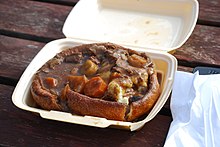

A Yorkshire pudding filled with mashed potato, beef, gravy and vegetables


Yorkshire pudding cooked in 22 cm diameter frying pan
Cooking method

Yorkshire pudding is cooked by pouring a batter made from milk (or water), flour and eggs into preheated, oiled, baking pans, ramekins or muffin tins (in the case of miniature puddings). A basic formula uses ​1⁄3 cup flour and ​1⁄3 cup liquid per egg. Water produces a lighter crisper but less sweet pudding than using milk. They can also be baked in the oven in muffin tins A 1926 recipe involves covering the pudding with greaseproof paper to steam it and then serving it with jam, butter and sugar.


Recipe

PREP: 5 MINSCOOK: 20 MINS
MAKES 8 LARGE PUDS OR 24 SMALL

The secret to getting gloriously puffed-up Yorkshires is to have the fat sizzling hot and don't open the oven door!

Ingredients

140g plain flour (this is about 200ml/7fl oz)
4 eggs
200ml milk
sunflower oil , for cooking

Method

Heat oven to 230C/fan 210C/gas 8. Drizzle a little sunflower oil evenly into 2 x 4-hole Yorkshire pudding tins or a 12-hole non-stick muffin tin and place in the oven to heat through.
To make the batter, tip 140g plain flour into a bowl and beat in four eggs until smooth. Gradually add 200ml milk and carry on beating until the mix is completely lump-free. Season with salt and pepper. Pour the batter into a jug, then remove the hot tins from the oven. Carefully and evenly pour the batter into the holes. Place the tins back in the oven and leave undisturbed for 20-25 mins until the puddings have puffed up and browned. Serve immediately. You can now cool them and freeze for up to 1 month.

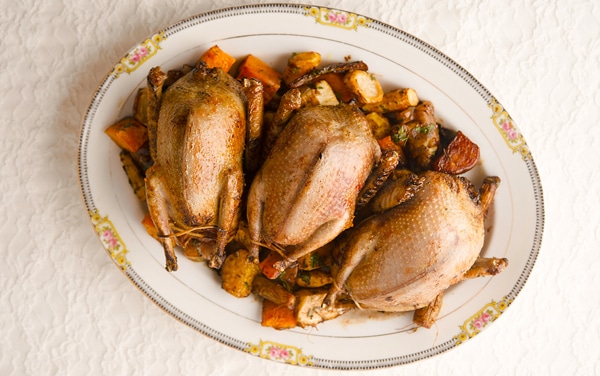
Roast Pigeon, a recipe from the Bard of Bat Yam, Poet Laureate of Zion and Stephen Darori


ROAST PIGEON


Here in Zion, everyone seems to think there’s something dodgy about hunting and eating pigeons, which are, after all, a non-native, borderline invasive species totally unprotected in most states (although in the Bat Yam and Tel Aviv  they are, inexplicably, considered a pests).

Mind you, I’m not talking about hunting city pigeons, whose crops are stuffed with Doritos and cigarette butts. We chase “barnies” that live in semi-abandoned barns who spend their days gorging themselves on grain and seeds. Still, talk to any Israeli about Roast Pigeonand you’ll get the squinched nose. “Ew! Dirty!”


Sorry, but I have a thing for pigeons. I love hunting them, I love how fast they fly, how tough they are — pigeons don’t die easily — and I love how they taste. I know, I know, some of you are already tuning out. Fine. More for us. But can I hear from the Britons out there? Back me up: Wood pigeons are damn good, right?

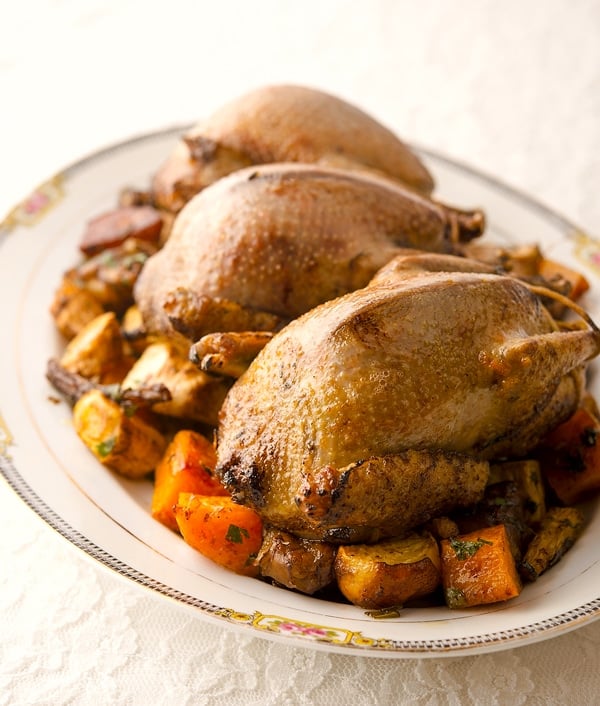
This recipe is an homage to my Polish ancestors. It is just a simple roast pigeon, served atop a bed of roasted root vegetables, with a little malt (or beer) vinegar splashed on and served, ideally, with a British pale ale or a glass of claret.

The great chef Fergus Henderson’s The Whole Beast: Nose to Tail Eating serves as my inspiration, with a few modifications. I probably cook as many little birds as anyone, and I have a few pointers you might want to learn before you pop your rock doves (or wood pigeons) in the oven.

First, pigeons are a red meat bird and should be eaten somewhere around medium.

What’s more, they are rarely fat, although once in a blue moon you’ll find a pigeon so morbidly obese you have no idea how it flew. (Those are a treat for the table, by the way.) Normally, however, you need to deal with athletic birds, able to cruise around at 55 miles an hour with a top end at close to 90 miles an hour; this makes them the fastest game bird in North America. Impressed yet?

Incidentally, if you like doves you will like pigeons. Pigeons are to doves what hares are to cottontails, or geese are to ducks: Bigger, smarter, tougher, older. Where most doves barely live a year, the average lifespan in the wild of a typical pigeon is five years. Yep, that’s older than most deer you shoot. So you’ll need to deal with that.

You can sometimes tell if you have old birds. Their feet look like they’ve been walked on for years and their keelbones are super hard. Young birds have a flexible keelbone and are just generally fresher looking. They also tend to have lighter colored meat. But it’s not an exact science.

So as an insurance policy against toughness, you need to start the cooking of the legs and wings before the breast. The easiest way to do this is to sear the legs and wings in hot butter or oil before you roast the bird. You don’t want to sear the breast, though, because you want it to be pink when you serve it. To do this, you need to hold the pigeon with tongs in the hot oil and be vigilant.

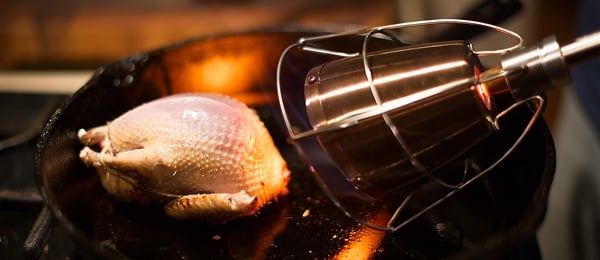
There is another way. I recently bought a nifty kitchen device called the Searzall Blowtorch Attachment. You screw this baby onto a Bernzomatic TS4000 Trigger Start Torch, which uses for fuel those little green propane tanks you get in the supermarket. Why not just use the torch? Because it gives meat a nasty propane stink. The Searzall converts the propane flame into radiant heat energy. I used the Searzall to pre-cook the legs and wings of the pigeons here, and it worked like a charm.

SavePhoto by Holly A. Heyser

I could have easily seared the breasts, too, and, had I wanted to, I might have been able to cook the whole bird with the torch. But I am still working out the ins and outs of this thing — and I wanted to give you a recipe that you can repeat without special equipment.

For any of you who have eaten doves, pigeons taste pretty much the same, although they can be a little more aggressively flavored. Squab, readily available in fancier restaurants, is just a baby pigeon. The closest parallel beyond that is wild duck, like a teal, only without the fat layer.


Pigeon is meaty, but not so much as venison or beef. Very tightly grained, especially the breast meat. It takes salt and vinegar very well, and is “gamey” only in the sense that it tastes like something, not like flaccid, corn-fed, penned beasts.

It’s a bird to get down on, too: Pick it up and gnaw. Sure, you can carve it and get all white linen, but I find it so much better eaten caveman style. Juices flowing, crispy skin on the legs, which are the best part to my mind.

So. Damn. Good. Go get some, people!


Roast Pigeon Recipe  with Root Vegetables
Prep Time
30 mins
Cook Time
1 hr
Total Time
1 hr 30 mins


Pigeons are a smallish, dark meat bird with very little fat. Closest substitution would be store-bought squab, which is to pigeon what veal is to beef. You could also use ptarmigan or sharp-tailed grouse. You'll only need one per person, and up the roasting time to 12 to 14 minutes. As for the vegetables, go for it. Use whatever you want. The more the better, and the crazier the better. I served this with salsify, parsley root, carrots, Jerusalem artichokes and golden beets. Have it it.
Course: Main Course
Cuisine: British
Serves: 4 people

Ingredients

2 to 4 pigeons, plucked and dressed
1/4 cup melted butter or olive oil
Salt and black pepper
2 large carrots, peeled and cut into chunks
4 to 6 Jerusalem artichokes, cut into chunks
2 parsnips, peeled and cut into chunks
2 to 4 salsify roots, scrubbed and cut into 2-inch lengths (optional)
1 or 2 roots of Hamburg or root parsley, cut into chunks (optional)
3 tablespoons chopped parsley
Beer vinegar or malt vinegar, for garnish

Instructions

  • Preheat the oven to 425°F. Put all the chunked-up vegetables in a small roasting pan and coat with about half of the melted butter. Salt them well and pop them in the oven to roast. Take the pigeons out of the fridge when the veggies go into the oven. Let the pigeons come to room temperature for 30 minutes.
  • Stir the root vegetables, which should be starting to get brown. Paint the pigeons with more melted butter and salt them well. Pour the remaining melted butter into a small pan and get it hot. Sear the sides of the pigeons in the hot butter. You want to get the legs and wings halfway cooked before the birds go into the oven. This should take about 6 to 10 minutes. Don't sear the breast meat.
  • Check the vegetables. They should be pretty close to being done. If they are, remove them from the oven, put in a bowl and cover with foil. Turn the oven up to 475°F, or even 500°F if it will go that high. Wipe out the roasting pan. Let the pigeons rest for the 10 minutes or so this will take. When the oven is ready, put the pigeons into the roasting pan, breast side up. Roast for 10 minutes.
  • Remove the pigeons from the oven and set on a cutting board. Turn off the oven, pour the vegetables back into the roasting pan, toss with the chopped parsley and set into the oven to re-warm and cook a bit further. Let the pigeons rest for 5 minutes before serving. Serve them surrounded by the vegetables, which you can season with a little vinegar if you want.

Friday, July 13, 2018

Fay Baker Drus's Brisket with Crispy Potatoe Leek Kugal and Roasted Garlic Asparagus , an edited and adaped recipe by the Bard of Bat Yam (#BardOfBatYam) , Poet Laureate Of Zion ( #PoetlaureateOfZion) , Stephen Darori,(@stephendarori)


Image result for Brisket


YIELD
8–10 servings

INGREDIENTS


a 5- to 6-pound first-cut beef brisket

3 tablespoons vegetable oil

3 large yellow onions, cut into 1/2-inch pieces (about 5 cups or 3 pounds)

2 or 3 large garlic cloves, or to taste, minced

1 teaspoon paprika, preferably Hungarian

3/4 teaspoon salt

3/4 teaspoon freshly ground pepper

PREPARATION

Preheat oven to 375°F.

In a Dutch oven or other heavy baking pan large enough to hold brisket heat 1 tablespoon oil in oven 10 minutes. Pat brisket dry and season with salt and pepper. Roast brisket in pan, uncovered, 30 minutes.

While brisket is roasting, in a large heavy skillet cook onions in remaining 2 tablespoons oil over moderately high heat, stirring, until softened and beginning to turn golden. Reduce heat and cook onions, stirring occasionally and reducing heat if necessary, until deep golden, about 20 minutes more. Stir in garlic, paprika, salt, and pepper and cook 1 minute. Stir in 3 cups water and bring to a boil.

Spoon onion mixture over brisket and bake, covered, with lid 1/2 inch ajar, 3 1/2 hours, or until brisket is tender. (Check pan every hour and if necessary add more water.) Remove brisket from oven and let cool in onion mixture 1 hour.

Remove brisket from pan, scraping onion mixture back into pan, and chill, wrapped in foil, overnight. Spoon onion mixture into a 1-quart measure and chill, covered, overnight.

Preheat oven to 350°F.

Discard fat from onion mixture, add enough water to mixture to measure 3 cups total, and in a blender blend gravy until smooth. Slice brisket against the grain (thick or thin, as you prefer). In a large ovenproof skillet heat gravy until hot, add brisket, and heat in oven 30 minutes.

Crispy Potato-Leek Kugel Recipe 

Image result for Crispy Potato-Leek Kugel Recipe

YIELD
Serves 8

ACTIVE TIME
45 minutes

TOTAL TIME
2 hours

INGREDIENTS

9 medium russet potatoes (about 4 1/2 pounds), peeled
7 tablespoons vegetable oil, divided
3 medium leeks, white and pale-green parts only, thinly sliced crosswise
2 1/2 teaspoons kosher salt, divided, plus more
3/4 teaspoon freshly ground black pepper, divided
2 garlic cloves, finely chopped
1 small onion
4 large eggs, lightly beaten
1 tablespoon plus 1 teaspoon fresh thyme leaves, divided
Special Equipment:
An 8x8" baking pan

PREPARATION


  1. Preheat oven to 375°. Cut 4 potatoes into 1" chunks and place in a medium pot. Cover with cold water by 1". Season water generously with salt, bring to a boil over medium-high heat, and cook until potatoes are tender, 10-12 minutes. Drain well, transfer to a large bowl, and mash with a potato masher; set aside.
  2. Meanwhile, heat 2 Tbsp. oil in a large skillet over medium until shimmering. Add leeks, 1/4 tsp. salt, and 1/4 tsp. pepper and cook, stirring frequently, until softened and golden, 5-8 minutes. Add garlic and cook until fragrant, 1-2 minutes more. Remove pan from heat and let cool slightly.
  3. Grease bottom and sides of an 8x8" baking pan with 2 Tbsp. oil. Place pan in oven for 10 minutes.
  4. Meanwhile, grate 3 potatoes and onion using the large holes of a box grater or a food processor fit with a shredding blade. Wrap potatoes and onion in a clean dishtowel or several layers of paper towels and squeeze out as much liquid as you can; add to the bowl with the mashed potatoes. Stir in sautéed leeks and garlic, eggs, 2 Tbsp. oil, 1 Tbsp. thyme, 2 tsp. salt, and 1/4 tsp. pepper; mix until well combined.
  5. Thinly slice remaining 2 potatoes and toss with remaining 1 Tbsp. oil, 1 tsp. thyme, 1/4 tsp. salt, and 1/4 tsp. pepper in a medium bowl; set aside.
  6. Carefully remove preheated pan from oven and transfer potato-onion mixture to the pan (it should sizzle when it hits the hot oil). Smooth top with a spatula. Layer potato slices over the top in a shingled fashion. Bake until golden brown and cooked through, 60-75 minutes. Heat broiler; broil kugel until crispy crust forms, 1-2 minutes, watching carefully so it does not burn. Let cool briefly, then cut into squares to serve.


Roasted-Garlic Asparagus Recipe 

Image result for Roasted-Garlic Asparagus Recipe

YIELD 
Makes 6 servings

INGREDIENTS

1/2 cup extra-virgin olive oil
8 cloves fresh garlic, minced
1 teaspoon onion powder
2 tablespoons fresh finely chopped parsley
2 pounds thin asparagus, ends trimmed
Fleur de sel or coarse sea salt
Freshly ground black pepper

PREPARATION


  1. Preheat oven to 400°F.
  2. Line a large jelly-roll pan with parchment paper. Set aside.
  3. In a small pot, heat the oil, garlic, onion powder, and parsley on medium-low heat. Cook for 3 minutes, until the garlic mixture is fragrant but not browned.
  4. Spread the asparagus in a single layer on the prepared pan. Lightly sprinkle with coarse sea salt and freshly ground pepper. Drizzle on the garlic-oil mixture.
  5. Roast for 8-10 minutes, until the asparagus are bright green; do not overcook.
  6. Transfer to a platter and serve hot.


Yemenite Beef Soup, a recipe by the Bard of Bat Yam (#BardOfBatYam) , Poet Laureate Of Zion (#PoetLaureateOfZion) and Stephen Darori (@stephendarori)


Yemenite Beef Soup


Total Time: 3¾ hours (includes marinating) Serves: 4

  • 6 tablespoons ground turmeric
  • ¼ cup ground cumin
  • 2 tablespoons freshly ground black pepper
  • 1 pound boneless short ribs, cut into 2-inch chunks
  • 4 tablespoons schmaltz or olive oil
  • 1 tablespoon kosher salt
  • 1 onion, thinly sliced
  • 4 garlic cloves, slivered
  • 1 cup canned crushed tomatoes
  • 2 quarts chicken stock
  • 2 cilantro sprigs, plus cilantro leaves for serving
  • 2 parsley sprigs, plus parsley leaves for serving
  • 12 baby Yukon Gold potatoes, peeled
1. Make hawaij: Add turmeric, cumin and pepper to a jar with a tight fitting lid and shake to thoroughly combine. (Hawaij will keep in pantry up to 3 months.)
2. In a large bowl, combine short ribs, 2 tablespoons schmaltz, 2 tablespoons hawaij and salt, mixing well to evenly coat meat. Transfer to a plate and loosely cover with parchment paper. Refrigerate at least 1 hour or overnight.
3. Heat remaining schmaltz in a lidded large pot over medium-high heat until shimmering but not smoking. Cook short ribs, turning occasionally, until browned all over, about 5 minutes. Transfer meat to a plate and set aside.
4. Decrease heat to medium-low and add onions, garlic and 2 tablespoons hawaij. Cook, stirring frequently, until onions have softened but not browned, about 10 minutes. Add tomatoes and cook 5 minutes more. Add reserved short ribs, chicken stock and cilantro and parsley sprigs. Bring to a simmer, then cook, covered, 2 hours. Add potatoes and continue cooking until they are tender, about 20 minutes.
5. Serve soup in bowls, topped with cilantro and parsley leaves. Serve lachuch with the soup, if you like.

Saturday, June 30, 2018

Raisa Restaurant, Not Kosher, Rabbi Yohanan St. 8, Jaffa Tel. (03) 620-2262

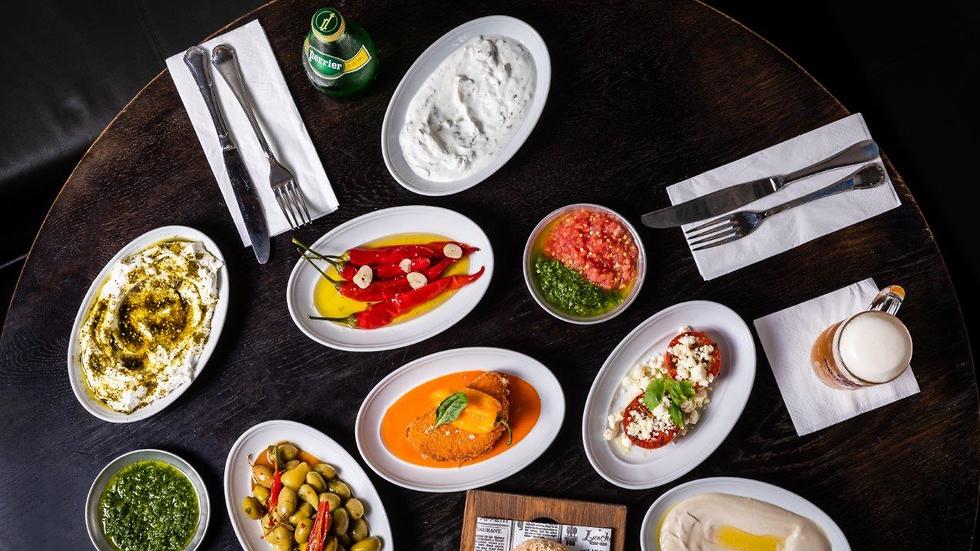
Raisa, a popular bar-restaurant in the heart of Jaffa’s Flea Market, serves very good food in an informal atmosphere.

The pedestrian alleys crisscrossing Jaffa’s Flea Market are lined with bars and restaurants, and at first glance, Raisa is typical of most of them: plenty of al fresco seating flanking the entrance, and a dimly lit interior dominated by two bars and long tables, where lively music plays.

What sets Raisa apart is the pedigree of its chef and co-owner: Uri Levy, who trained with the best in Israel and the world: under Sharon Cohen at Shila in Tel Aviv, and at L’Atelier de Joel Robuchon, a two-star Michelin restaurant in Paris. He has designed a menu that has something for everyone, including vegetarians and vegans, and he knows how to take a seemingly mundane dish and turn into something special.

Nevertheless, before getting down to ordering food, it is worth commencing with a couple of drinks. The cocktail menu lists a mixture of classics and house specialties, although on the evening of our visit, two of the latter were unavailable. Fortunately, that left still left us with two interesting choices: the Jack Sparrow and the Little Prince.


The Jack Sparrow—rum, pineapple juice, banana, caramel and lime juice, garnished with a slice of lemon and served on the rocks in a tall glass—was sweet but nonetheless refreshing, while the Little Prince—cognac, aged rum, cinnamon, orange and lemon—packed quite a punch.

The menu comprises five categories: Starters, which are more like dips or condiments than real appetizers; Land, six vegetable dishes; Sea, four entrees of fish or seafood; and Meat, with choices of lamb, beef or chicken. Four desserts are listed under the heading Sweets.

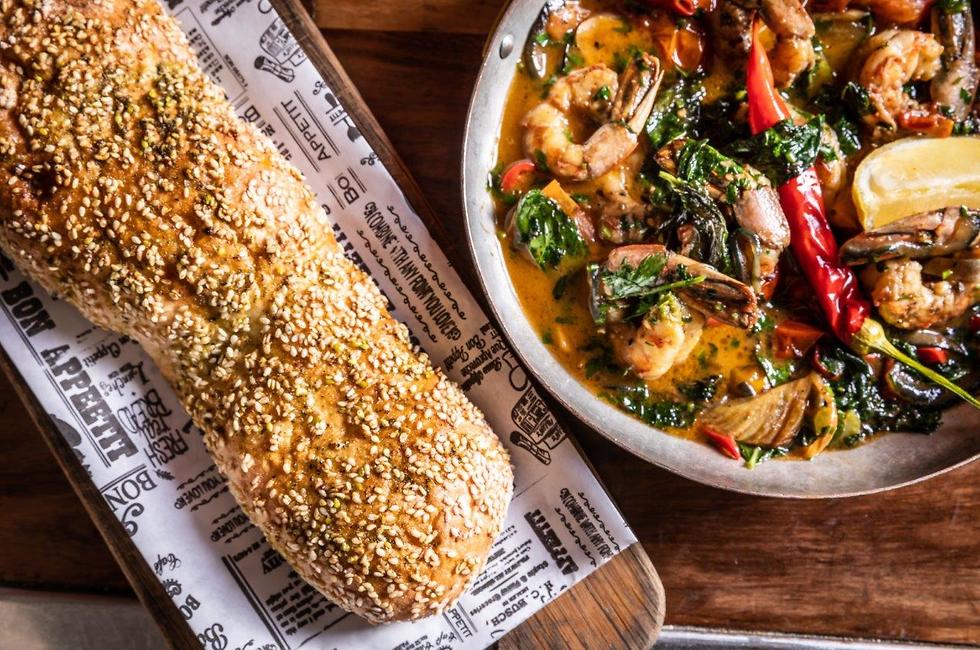
One of the starters is the house bread—a Jerusalem bagel that is fluffier than the original version—served with tiny saucers of tehina and spreadable white cheese; in order to add what turned out to be just a dollop of tomato salsa with skhoug, we had to shell out another NIS 10. This was particularly galling, since on the whole, the prices at Raisa are very reasonable.


Another starter was something called a “hot plate” on the English menu; we had to turn to the Hebrew menu to learn that it actually refers to a plate of spicy peppers. It was not the only instance where the English was either opaque or misleading: we almost did not order the dish described as chicken thighs, until the Hebrew made it clear that it was really pargit (pullet).

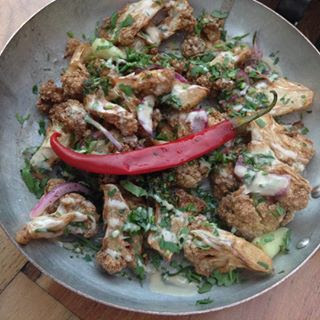
We began our meal with the cauliflower and black tehina—although the sesame sauce was gray, at the most. Still, the florets were al dente and delicious, enhanced nicely as well by green herbs, pickled shallots and hot and sour peppers.


Our second vegetable dish was “fired” eggplant carpaccio—although the word carpaccio does not appear in the Hebrew, nor was the aubergine sliced carpaccio-style. Nevertheless, this was an outstanding dish: the mellow eggplant—complemented perfectly by tehina, pine nuts and chili, plus a touch of sweetness provided by date syrup—practically melted in the mouth.


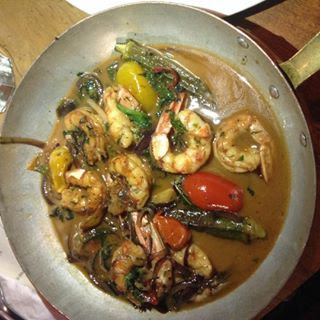
Moving on to the Sea category, we selected the “hot pan” of shrimps in a sauce of arak, fennel, okra, spinach and tomatoes. I am not a fan of arak on its own, but the anise liquor gave a whole extra dimension of flavor to the plump, juicy shrimp. And we finally had something worthy in which to dip our bread.


Finally, our two dishes from the Meat category exceeded expectations. The Hebrew menu (only) brags that Raisa’s lamb “cigars” are “not your (usual) wedding fare”—and the fat, golden-brown cylinders of phyllo pastry stuffed with ground lamb seasoned with cinnamon and flecked with mangold made this no idle boast. I don’t eat this Moroccan delicacy often, but these are about the best I have had.


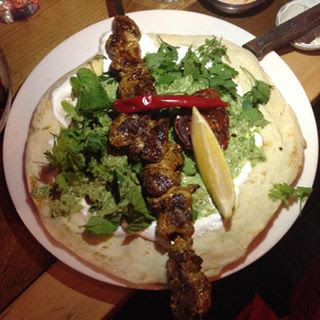
The “butter chicken Bagdad (sic) style” was a generous skewer of morsels of pullet atop a large lafa, slathered with yogurt and presented amidst homemade pickles, arugula and mint. It was quite a big portion, but we had no trouble polishing off this exceptional interpretation of what could have otherwise been a humdrum dish.


The desserts here, though, are quite another matter. Not that they are bad; it’s just that they are so commonplace, especially in comparison to the creative, Middle Eastern-inspired dishes heretofore.

Three of the four are Western standbys, served in just about every run-of-the-mill restaurant in Israel. With only malabi hinting at Levantine origins, we settled on crack pie and cheesecake; both were acceptable, but disappointing emanating from a kitchen helmed by the gifted Levy.

I was expecting some interesting variations on kanaffeh or basbousa or the like; it is to be hoped that Levy puts his mind to fashioning desserts worthy of his talents—and gets someone to fix the menu’s incredibly sloppy English.


Thursday, June 28, 2018

Sunday Roast, its origin and a recipe from the Bard Of Bat Yam (#BardOfBatYam), Poet Laureate Of Zion(#POet:aureateOfZion) , Stephen Darori (#stephendarori,#stephendrus, @stephendarori)


Sunday roast typically consists of roast beef, roast potatoes, other vegetables and Yorkshire pudding.

The Sunday roast is a traditional British main meal that is typically served on Sunday (hence the name), consisting of roasted meat, roast potato, and accompaniments such as Yorkshire pudding, stuffing, vegetables and gravy. Vegetables such as roast parsnips, Brussels sprouts, peas, carrots, runner beans, and broccoli are included and can be cooked in different styles; for example, cauliflower or leeks accompanied by a cheddar cheese sauce are popular, in addition to gravy. The Sunday roast is also popular in many parts of Ireland, especially in most of Ulster (chiefly in Northern Ireland and County Donegal).

Its prominence in British culture is such that in a UK poll it was ranked second in a list of things people love about Britain.[1] Other names for this meal are Sunday dinner, Sunday lunch, roast dinner, and Sunday joint (jointreferring specifically to the joint of meat). The meal is often comparable to a less grand version of a traditional Christmas dinner.

Besides being served in its original homelands, the tradition of a Sunday dinner has been a major influence on food cultures in the English-speaking world. Roast dinner is also a traditionally popular dish in the Republic of Ireland.[2] An Irish Sunday roast normally comprises roast beef or chicken, potatoes (mashed and/or roast), carrots, green vegetables (such as peas, beans, or Brussels sprouts), and gravy. In South Africa it is also common to have rice with a Sunday Roast.

Origin

The Sunday Roast originated in England as a meal to be eaten after church on Sunday. Eating a large meal following church services is common to all of the continent of Europe as with other Christian countries, but the Sunday Roast variant of this meal is uniquely English. On Sundays, all types of meat and dairy produce are allowed to be eaten, unlike on Fridays where many Roman Catholics and Anglicans traditionally abstain from eating meats, so ate fish instead. Likewise, it is traditional for Anglicans and English Catholics to fast before Sunday services, with a larger meal to break the fast afterwards. These religious rules created several traditional dishes in the United Kingdom.

Only eating fish on Friday resulted in a British tradition of 'fish Fridays' which is still common in fish and chip shops and restaurants across the United Kingdom on Fridays, particularly during Lent.

Fasting before church in Britain and the 'breaking' of that 'fast' afterwards created the British tradition of breakfast which later evolved into the full breakfast

To mark the end of not being able to eat meat the Sunday Roast was created as a mark of celebration.

There are two historical points on the origins of the modern Sunday roast. In the late 1700s during the industrial revolution in the United Kingdom, families would place a cut of meat into the oven as they got ready for church. They would then add in vegetables such as potatoes, turnips and parsnips before going to church on a Sunday morning. When they returned from the church the dinner was all but ready. The juices from the meat and vegetables were used to make a stock or gravy to pour on top of the dinner. The second opinion holds that the Sunday roast dates back to medieval times, when the village serfs served the squire for six days a week. Then, on the Sunday, after the morning church service, serfs would assemble in a field and practise their battle techniques and were rewarded with a feast of oxen roasted on a spit.

Typical elements
Meat[


Another Sunday roast with roast lamb, roast potatoes, carrots, green beans and Yorkshire pudding.


Another Sunday roast with roast beef ribs, roast potatoes, various vegetables and Yorkshire pudding.

Typical meats used for a Sunday roast are chicken, lamb, pork or roast beef, although seasonally duck, goose, gammon, turkey or (rarely) other game birds may be used.

Vegetables
Sunday roasts can be served with a range of boiled, steamed and/or roasted vegetables. The vegetables served vary seasonally and regionally, but will usually include roast potatoes, roasted in meat dripping or vegetable oil, and also gravymade from juices released by the roasting meat, perhaps supplemented by one or more stock cubes, gravy browning/thickening, roux or corn flour.

The potatoes can be cooked around the meat itself, absorbing the juices and fat directly (as in a traditional Cornish under-roast). However, many cooks prefer to cook the potatoes and the Yorkshire pudding in a hotter oven than that used for the joint and so remove the meat beforehand to rest and "settle" in a warm place.

Other vegetable dishes served with roast dinner can include mashed swede or turnip, roast parsnip, boiled or steamed cabbage, broccoli, green beans and boiled carrots and peas. It is also not uncommon for leftover composite vegetable dishes—such as cauliflower cheese and stewed red cabbage—to be served alongside the more usual assortment of plainly cooked seasonal vegetables.

Accompaniments

Common traditional accompaniments include:
Beef: Yorkshire pudding, suet pudding; English mustard, or horseradish sauce.
Pork: crackling and sage-and-onion stuffing; apple sauce or English mustard.
Lamb: mint sauce or jelly or redcurrant jelly.
Chicken: pigs in blankets, sausages or sausage meat, stuffing, bread sauce, apple sauce, cranberry sauce or redcurrant jelly.

RECIPES FOR TRADITIONAL SUNDAY ROAST

Serves 8

In many corners of the world, families gather for their own ritualized and culturally specific version of the Sunday roast—an old-fashioned meal, traditionally served in the afternoon and based on an important cut of meat (or a whole fowl), and typically accompanied by assorted vegetables. Roasts can be lean, so we add enough beef fat to the pan to give us plenty of drippings. NOTE: You'll need to prepare the batter for the puddings the day before.

**FOR THE YORKSHIRE PUDDINGS:
1 cup flour
1⁄2 tsp. salt
2 eggs, lightly beaten
1 cup milk
**

**FOR THE ROAST BEEF AND GRAVY:
1 8-12-lb. rib roast of beef
4-oz. piece beef fat
Salt and freshly ground black pepper
2 tbsp. flour
1 1⁄2 cups red wine
**

**FOR THE ROASTED VEGETABLES:
4 lbs. russet potatoes, peeled and quartered
1 1⁄2 lbs. small carrots, peeled and trimmed
1 1⁄2 lbs. parsnips, peeled, trimmed, and quartered
lengthwise
Salt
1 cup flour
Freshly ground black pepper
**

**FOR THE HORSERADISH CREAM:
1 cup heavy cream
1⁄4 cup prepared horseradish
1 tsp. white wine vinegar
Salt and freshly ground white pepper
**

**FOR THE BRUSSELS SPROUTS:
3 lbs. brussels sprouts, trimmed
Salt
3 tbsp. butter
**

1. For the yorkshire puddings: Sift together flour and salt into a mixing bowl. Add eggs and milk to flour, whisking constantly, until batter is smooth. Cover with plastic wrap and refrigerate overnight.

2. For the roast beef and gravy: Preheat oven to 325°. Put beef, meaty side up, and beef fat into a heavy-bottomed roasting pan and generously season with salt and pepper. Roast meat until internal temperature reaches 120° for rare, 130-135° for medium rare, and 140° for medium, 3-4 1/2 hours.

3. For the roasted vegetables: Put potatoes, carrots, and parsnips into a large pot of cold salted water and bring to a boil over high heat. Reduce heat to medium and parboil vegetables, about 10 minutes. Drain, reserving 1 1/2 cups of the cooking water, and set both aside. (Vegetables may be cooked up to 1 hour ahead.)

4. For the horseradish cream: Whisk cream in a medium bowl until medium-soft peaks form. Fold in horseradish and vinegar, then season to taste with salt and pepper. Transfer to a serving bowl and refrigerate until ready to use. (Cream may be made up to 1 hour ahead.)

5. Transfer roast to a warm serving platter or a carving board and loosely cover with foil. Increase oven temperature to 450°. Discard rendered piece of beef fat, then pour off all but about 3 tbsp. of the pan drippings into a bowl. Set pan and bowl aside.

6. To finish the roasted vegetables, put about 1/2 cup of the reserved drippings from the bowl into another large roasting pan and put into oven until fat is hot. Meanwhile, put flour and salt and pepper to taste into a large, wide bowl. Dredge potatoes, carrots, and parsnips in seasoned flour, shaking off excess. Remove pan from oven, add flour-coated vegetables, and turn to coat in the fat. Return pan to oven and roast vegetables, turning several times, until golden, 30-45 minutes.

7. To finish the yorkshire puddings, put about 1 tsp. of the reserved drippings from the bowl into each mold of two 4-mold yorkshire pudding tins or about 1/4 cup of the drippings into a large baking dish and put into oven until hot. Stir prepared batter until smooth, then pour into hot molds or dish and immediately return to oven. Bake until puffed and golden brown, about 30 minutes.

8. To make the gravy, put the reserved pan with the drippings on top of stove and heat over medium heat until hot. Add flour and cook, stirring constantly, until lightly browned, about 1 minute. Add wine and cook, scraping up any browned bits, until reduced by half, about 8 minutes. Add the reserved vegetable cooking water and cook for 3-4 minutes more. Stir in any meat juices accumulated from platter and season to taste with salt and pepper. Keep warm over low heat.

9. For the brussels sprouts: Put brussels sprouts into a medium pot of cold salted water and bring to a boil over high heat. Reduce heat to medium and cook until just soft, about 10 minutes. Drain, return to pot, and cover to keep warm.

10. For the peas: Bring a medium pot of salted water to a boil over high heat. Add peas and cook until soft, 3-8 minutes. Drain, return to pot, and cover to keep warm.

11. To serve the Sunday roast, transfer roasted vegetables to a warm serving platter. Unmold yorkshire puddings or cut into large pieces and transfer to a serving plate. Transfer gravy to a warm gravy boat. Transfer brussels sprouts and peas to two separate warm serving dishes, add butter to each, and season to taste with salt. Carve roast at table and serve with the roasted vegetables, yorkshire puddings, gravy, brussels sprouts, peas, and horseradish cream.


Yorkshire pudding,the history and a recipe by the Bard of Bat Yam ( #BardOfBatYam), Poet Laureate Of Zion (#PoetLaureateOfZion) , Stephen Darori (@StephenDarori, #StephenDarori)

Johns Yorkshire Puddings.jpg

Yorkshire pudding is a common British side dish baked pudding[made from batter consisting of eggs, flour, and milk or water. It is a versatile food that can be served in numerous ways depending on the choice of ingredients, the size of the pudding and the accompanying components of the dish. As a first course it can be served with onion gravy. For a main course it is often served with beef and gravy and is part of the traditional Sunday roast, but can also be filled with foods such as bangers and mash to make a meal.

History

Mini Yorkshire puddings, served as part of a traditional Sunday roast

When wheat flour began to come into common use for making cakes and puddings, cooks in the north of England devised a means of making use of the fat that dropped into the dripping pan to cook a batter pudding while the meat roasted. In 1737, a recipe for "a dripping pudding" (later named "The Yorkshire Pudding") was published in the book The Whole Duty of a Woman:

Make a good batter as for pancakes; put in a hot toss-pan over the fire with a bit of butter to fry the bottom a little then put the pan and butter under a shoulder of mutton, instead of a dripping pan, keeping frequently shaking it by the handle and it will be light and savoury, and fit to take up when your mutton is enough; then turn it in a dish and serve it hot.

Similar instructions were published during 1747 in the book The Art of Cookery made Plain and Easy by Hannah Glasse, with the name 'Yorkshire pudding'. It was she who renamed the original version, known as Dripping Pudding, which had been cooked in England for centuries, although these puddings were much flatter than the puffy versions made today.William Sitwell suggests that the pudding got the name 'Yorkshire' due to the regions association with coal and the higher temperatures this produced which helped to make the batter crispier.

Originally the Yorkshire pudding was served as a first course with thick gravy to dull the appetite with the low-cost ingredients so that the diners would not eat so much of the more expensive meat in the next course.An early recipe appeared in Sir Alexander William George Cassey's The Whole Duty of a Woman during 1737. Because the rich gravy from the roast meat drippings was used up with the first course, the main meat and vegetable course was often served with a parsley or white sauce.

In poorer households, the pudding was often served as the only course. Using dripping,a simple meal was made with flour, eggs and milk. This was traditionally eaten with a gravy or sauce, to moisten the pudding.

The Yorkshire pudding is meant to rise. The Royal Society of Chemistry suggested during 2008 that "A Yorkshire pudding isn't a Yorkshire pudding if it is less than four inches tall".

Recipe

Ingredients

140g plain flour (this is about 200ml/7fl oz)
4 eggs
200ml milk
sunflower oil , for cooking


Method

Heat oven to 230C/fan 210C/gas 8. Drizzle a little sunflower oil evenly into 2 x 4-hole Yorkshire pudding tins or a 12-hole non-stick muffin tin and place in the oven to heat through.

To make the batter, tip 140g plain flour into a bowl and beat in four eggs until smooth. Gradually add 200ml milk and carry on beating until the mix is completely lump-free. Season with salt and pepper. Pour the batter into a jug, then remove the hot muddin tins from the oven. Carefully and evenly pour the batter into the holes. Place the tins back in the oven and leave undisturbed for 20-25 mins until the puddings have puffed up and browned. Serve immediately. You can now cool them and freeze for up to 1 month.